What Actually Matters When Buying a Coonhound (And What Doesn’t)
Look, I need to be straight with you about something. Buying a coonhound is probably one of the most emotional decisions you’ll make as a hunter, and honestly, it’s also one of the easiest ways to get completely burned.
I’ve watched so many people waste serious money, blow entire seasons, and some even quit hunting altogether because they bought the wrong dog for all the wrong reasons. And here’s the thing: it wasn’t because they didn’t care. They cared a lot. They just listened to the wrong advice and focused on stuff that sounds important but actually means nothing when you’re out there in the woods.
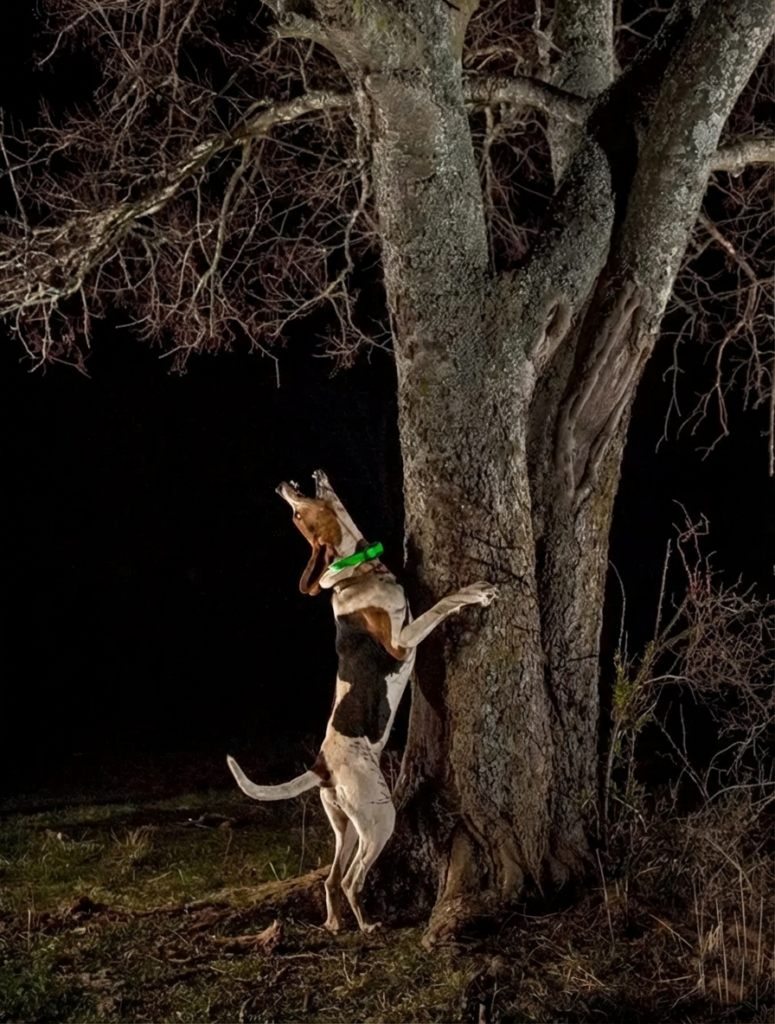
Most folks get obsessed with things that look good on paper or sound impressive when you’re talking at the truck, but none of that actually trees coons. Meanwhile, they completely ignore the handful of things that genuinely matter. So I want to slow you down for a minute, cut through all the noise, and help you make a choice you’ll still be happy with six months from now. Or better yet, six years from now.
The Truth About Bloodlines
Okay, let’s talk about bloodlines first because this is where everyone gets worked up.
Yes, bloodlines matter. I’m not going to sit here and tell you they don’t. But here’s what nobody wants to admit: papers don’t tree coons. They just don’t.
Think of a pedigree like a probability map. It can tell you what might be in that dog’s genetics, but it can’t tell you what actually is there. You could have the most stacked set of papers in the world, and it still won’t fix a weak-minded dog. It won’t make up for poor training, and it definitely won’t fix a bad match between the dog and your hunting style.
So what actually matters more than seeing some famous champion’s name three generations back? It’s pretty simple, really. What do the parents actually do in the woods? Not what their papers say they should do, but what they really do when you turn them loose. How consistent are they? Did they start early, or did someone have to drag them into it? Are they honest dogs that strike and tree, or are they just loud and running their mouths?
If you’re looking at a pup, actually seeing the sire and dam hunt is worth more than any pedigree you can print out. Or at minimum, get real-world reports from people who’ve actually followed those dogs, not just the breeder’s sales pitch.
And here’s something most sellers will never tell you, because why would they: even the absolute best crosses throw average dogs sometimes. That’s just how genetics work. They’re not guarantees, they’re just better odds.
Why Age Matters More Than Breed
People love to argue about breeds. It sells magazines, starts fights at competitions, and gets people all worked up online. But you know what actually determines whether you’re going to have a good season or a frustrating one? The age and training level of the dog you bring home.
The biggest mistake I see new coon hunters make over and over is buying a puppy when what they really needed was a started dog. Let me break this down for you.
Puppies are cheap upfront. That part’s appealing, I get it. But they’re expensive as hell over time. You’re paying in feed, vet bills, countless hours of your time, and a whole lot of frustration. Oh, and here’s the kicker: there’s a real chance that pup never makes it. Some dogs just don’t have it, no matter what you do.
Now, if you genuinely enjoy training and you’ve got the patience for it, and you’re hunting multiple nights every single week, then yeah, a pup can be incredibly rewarding. But if that’s not you? If you’re a weekend hunter with a full-time job and a family? A puppy can sour you on this whole sport faster than anything else.
Started dogs are a whole different story, but you’ve got to be careful here. “Started” is probably the most abused word in all of coon hunting. I’m serious. To some sellers, “started” means the dog saw a caged coon one time at a hunting expo. To others, it means the dog trees sometimes, you know, with a lot of help, and maybe on a good night with a full moon.
A true started dog is one that actually goes hunting, opens on track without you begging it to, shows real tree instinct, and just needs consistency from you instead of miracles. They cost more money, no question about it. But they can shorten your learning curve by months or even years.
Then you’ve got finished dogs. These are expensive for a very good reason: you’re buying proof instead of potential. For hunters who work long hours, or older hunters who don’t want to spend the next two years developing a pup, this is often the smartest move you can make, even if writing that check hurts a little.
Temperament and Brains Will Make or Break Everything
This is where most people shopping for a coonhound completely blow it.
They’re looking for the dog with the loudest mouth, the biggest frame, the flashiest coat, all that stuff that looks impressive. And they completely ignore what’s happening between that dog’s ears.
A dog’s temperament is going to determine how it handles pressure in the woods. How it reacts when you correct it. How consistent it’ll be week after week. How long it’s actually going to last in this sport before it burns out or quits on you.
Dogs that are bold but still level-headed? They learn faster, and they handle mistakes way better. Nervy dogs might look amazing early on, all fired up and running hard, and then they fall completely apart the first time things get tough or confusing.
Watch how a young dog reacts to new places. How does it handle being tied back while other dogs work? What happens when another dog gets in its space or crowds it at the tree? These little things tell you so much.
You’re not just buying a hunting dog here. You’re buying a partner you’re going to spend a lot of dark, cold nights with. Make sure you actually like what you’re getting.
Natural Ability Beats Any Training Tool Every Single Time
Technology has made coon hunting safer and way more efficient than it used to be. I love my tracking collar as much as the next guy. But here’s a truth that hasn’t changed and never will: you cannot train what isn’t there to begin with.
Tracking collars don’t create drive in a lazy dog. E-collars don’t install intelligence. Fancy lights don’t teach a dog how to finish a difficult track or problem-solve when the scent gets tricky.
Training tools should support the natural ability that’s already in your dog. They shouldn’t be expected to replace it.
A dog that has real desire, genuine independence, good track sense, and solid tree instinct is usually going to figure things out with the right exposure and opportunities. Give that dog time in the woods, and it’ll develop.
But a dog without those natural traits? That dog will eat up your time, drain your bank account, and test every ounce of patience you have, no matter how expensive the gear you buy for it. You could have every training tool on the market, and it won’t matter.
Gear helps you polish a dog that’s already got potential. It doesn’t build a dog from scratch.
What Doesn’t Actually Matter (Even Though Everyone Obsesses Over It)
Alright, time to step on some toes, because this stuff gets hunters in trouble all the time, and nobody wants to say it out loud.
Color and looks? The woods don’t care what color your dog is. Coons definitely don’t care. A bluetick doesn’t tree more coons than a redbone just because of its coat pattern. It’s all ego and preference, which is fine for you, but don’t pretend it matters for hunting.
Size is another one. Big dogs don’t tree more coons. Athletic dogs that can hunt hard night after night without breaking down, those are the ones that produce. I’ve seen plenty of oversized dogs that looked impressive tied to the truck, but couldn’t make it through a full night.
Mouth volume drives me crazy. Loud doesn’t mean accurate. There are plenty of quiet dogs out there that consistently get treed with the meat while some loud dog is still running its mouth a ridge over about nothing.
And breed loyalty? Look, I know people get attached to their breed, and that’s fine. But no single breed has a monopoly on good dogs or bad ones. Every breed out there has absolute standouts and complete culls. If you’re choosing your next dog with your ego instead of thinking about what you actually need, you’re already heading down the wrong path.
Price Is a Signal, But It’s Not the Whole Story
Here’s something I’ve learned the hard way: cheap dogs are rarely actually cheap in the long run.
That doesn’t automatically mean expensive dogs are always good. Plenty of overpriced dogs out there, trust me. But price usually reflects something real, like the time someone invested in that dog, the proof it’s shown in actual hunting conditions, or the demand for dogs from that particular line or trainer.
Stop worrying so much about the upfront cost and think more about value. What are you actually getting?
A dog that costs you $2,500 but trees coons every single time you drop it? That dog is way cheaper in the end than a $500 dog that never figures it out and sits in your kennel eating food for two years before you finally admit it’s not working.
Red Flags That Should Make You Walk Away Immediately
Some warning signs are subtle. Others are basically sirens going off. Either way, you need to pay attention.
If the seller won’t actually hunt the dog for you, that’s a problem. If their stories about what the dog does don’t match what you’re seeing the dog actually do, that’s a problem. If the dog won’t leave your feet or shows no independence at all, that’s a problem. If every question you ask gets answered with excuses faster than results, you know what you need to do.
When everything is “almost there” or “just needs a little more time” or “was doing great until…” just walk away. A genuinely good dog doesn’t need that much explaining or qualifying. It either does the work, or it doesn’t.
The Most Overlooked Thing: Matching the Dog to the Hunter
This is where you need to be brutally honest with yourself, and most people aren’t.
How often do you really hunt? Not how often you want to hunt or plan to hunt, but how often you actually get out there? Do you hunt alone or do you run with a group? Do you want a dog with total independence that’ll go out and do its own thing, or do you want one that works closer and plays well with others?
Can you handle a dog that needs firm correction? Can you deal with setbacks without getting discouraged? Some dogs are just too much dog for most people. That doesn’t make them bad dogs. It makes them a bad match.
The right dog for you, specifically for your situation and your hunting style, is always going to be better than the “best” dog that works for someone else. Always.
The Bottom Line on All of This
Coon hunting has never been about finding the perfect dog, because perfect doesn’t exist. It’s about consistency. It’s about finding a dog that shows up night after night and does the work.
The dogs that last in this sport, the ones you’ll still be hunting five or ten years from now, they’re not always the flashiest ones. They’re not always the ones that cost the most or have the most impressive papers. They’re the ones with enough natural ability, enough brains, and the right handler behind them who understands what they’ve got.
If you can focus on proven ability over hype, temperament over ego, and finding the right fit instead of chasing some fantasy, you’re going to save yourself years of frustration. And honestly, you’ll probably fall even deeper in love with this sport than you already are.
And if you’re just starting out in coon hunting, remember this one thing: a good decision right now, upfront, beats trying to fix a bad decision later every single time. Take your time. Ask the right questions. See dogs hunt before you buy them. Be honest about what you need.
Trust me, your future self will thank you.