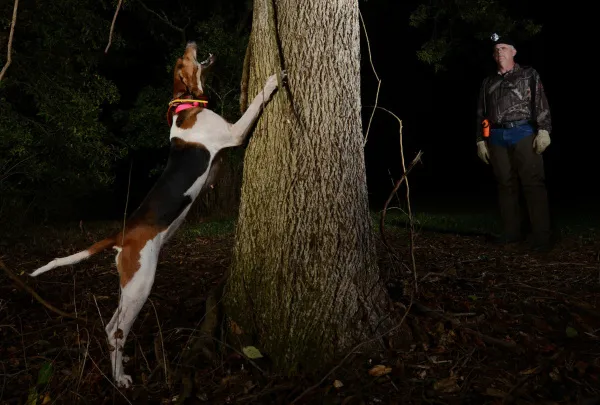
If you’ve been around young coonhounds long enough, you’ve heard it a hundred times:
“He’s got all the drive in the world.”
Usually said right after the dog blew through the country, struck junk, or treed slick for the third time that week.
Drive gets blamed for a lot of things. So does lack of it. But most young coonhounds don’t fail because they don’t have enough motor. They fail because nobody ever showed them what that motor is supposed to be attached to.
There’s a difference between energy and purpose. And if you don’t build direction early, that energy turns into chaos.
The “More Hunting Will Fix It” Trap
When a young hound starts making mistakes, the default answer is almost always the same: “Hunt him more.”
Sometimes that’s true. A dog that hasn’t seen enough woods can’t be expected to understand them. But more hunting without structure doesn’t fix confusion; it multiplies it.
Here’s what usually happens:
The dog hunts hard.
Strikes fast.
Moves a track with excitement.
Comes treed quick.
From the outside, it looks like progress. The dog is independent. He’s covering ground. He’s loud and intense on the tree.
But start looking closer.
Is he finishing tracks accurately? Is he checking himself when scent breaks down? Is he consistent alone?
Or is he just running hard and hoping it works out?
A young coonhound with drive but no direction doesn’t slow down when things get tough. He speeds up. And speeding up is usually guessing.
What Direction Actually Means
Direction isn’t obedience. It’s not keeping a dog under your feet. And it’s not micromanaging every step.
Direction means the dog understands:
- What scent he’s supposed to be working
- That the track must be finished, not abandoned
- That accuracy matters more than speed
- That independence doesn’t mean recklessness
A young hound with direction may not look as flashy early. He might not be the first one treed every drop. But over time, he becomes the one you trust.
That doesn’t happen by accident.
How Direction Gets Lost
Most direction problems start in one of three ways.
1. Overpraising Speed
Early on, it’s easy to get excited about a dog that strikes quick and gets treed fast. Nobody complains about hustle.
But when speed is celebrated more than accuracy, the dog learns what you value.
If you lead him off slick trees without consequence and brag about how quick he was, you’re teaching him that speed is the goal. Over time, he’ll choose being first over being right.
2. Too Much Pack Influence
Running with seasoned dogs has its place. A good older hound can teach timing, track movement, and tree style.
But if a young coonhound never has to make decisions alone, he won’t learn how.
You’ll see it later when he won’t get deep by himself, checks back constantly, or covers another dog instead of working his own track. That’s not independence. That’s dependence in disguise.
3. Ignoring Early Sloppiness
Young dogs make mistakes. That’s part of learning.
But there’s a difference between inexperience and patterns.
If a dog consistently leaves tracks unfinished, trees without working the track, or switches tracks when things get tough, and nothing changes, that behavior becomes default.
Direction isn’t added later. It’s built early.
The Illusion of Independence
There’s a lot of talk about wanting an “independent” coonhound.
Independence is valuable. A dog that can get by itself and produce coon without help is an asset.
But independence without direction is just separation.
A dog that gets by himself and trees wrong isn’t independent; he’s just alone. The woods at night hide a lot of problems. It’s easier to assume the dog is right when you can’t see every move he made getting there.
That’s why accuracy has to be non-negotiable early. If you’re not checking trees, not holding the dog accountable, and not paying attention to track work, you’re guessing almost as much as he is.
What Building Direction Looks Like
It’s not complicated. But it does require consistency.
Hunt Alone, On Purpose
A young coonhound needs solo time.
Not every drop. Not every week. But regularly enough that he has to strike his own track, work through loss, decide where the coon went, and stay treed because he believes it, not because others are barking.
You learn more about a young dog in two solo hunts than ten pack hunts.
Value Accuracy Over Speed
If the dog is right, reward it. If he’s wrong, don’t pretend he wasn’t.
That doesn’t mean heavy-handed correction. It means clarity.
Dogs repeat what works. If slick trees consistently result in praise or excitement, they’ll keep happening. If correct trees consistently result in reward and confidence, that becomes the pattern.
You can’t build direction if the dog doesn’t know what the standard is.
Let Tough Tracks Teach
Some handlers panic when a young dog struggles on a cold or tricky track. They step in too quickly, tone too soon, or call the dog off before he works through it.
Struggle is part of learning.
A dog that never has to figure out a tough track won’t know how when it matters. Direction isn’t just knowing what to do when it’s easy; it’s staying committed when it’s not.
How to Fix a Young Hound With No Direction
If you’re reading this and thinking your dog has plenty of drive but no consistency, don’t write him off yet.
Here’s where I’d start.
1. Slow Everything Down
Shorter hunts. Fewer drops. More attention to what actually happens on each one.
You’re not trying to wear him out. You’re trying to build understanding.
2. Hunt Solo More Often
Take away the crutch. See what he does when he can’t rely on other dogs.
The first few hunts might look rough. That’s fine. You’re exposing gaps so you can fill them.
3. Raise the Standard
Decide what you consider acceptable and stick to it.
If you’re okay with guessing, you’ll get guessing. If you demand accuracy, over time you’ll get accuracy.
Consistency from you creates consistency in the dog.
Final Thoughts
Most young coonhounds aren’t short on desire. They want to hunt. They want to tree. They want to work.
But desire without direction doesn’t produce reliable dogs. It produces streaky ones.
The difference between a flashy young hound and a dependable finished one isn’t usually drive. It’s structure, standards, and clarity early on.
You can’t fix a foundation later without extra work. Build direction from the beginning, and that drive everyone brags about finally has somewhere useful to go.
Starting a young coonhound? Get the free “First 30 Nights” guide before you make mistakes you can’t undo
Direction only comes from structure.