There’s a moment most handlers recognize.
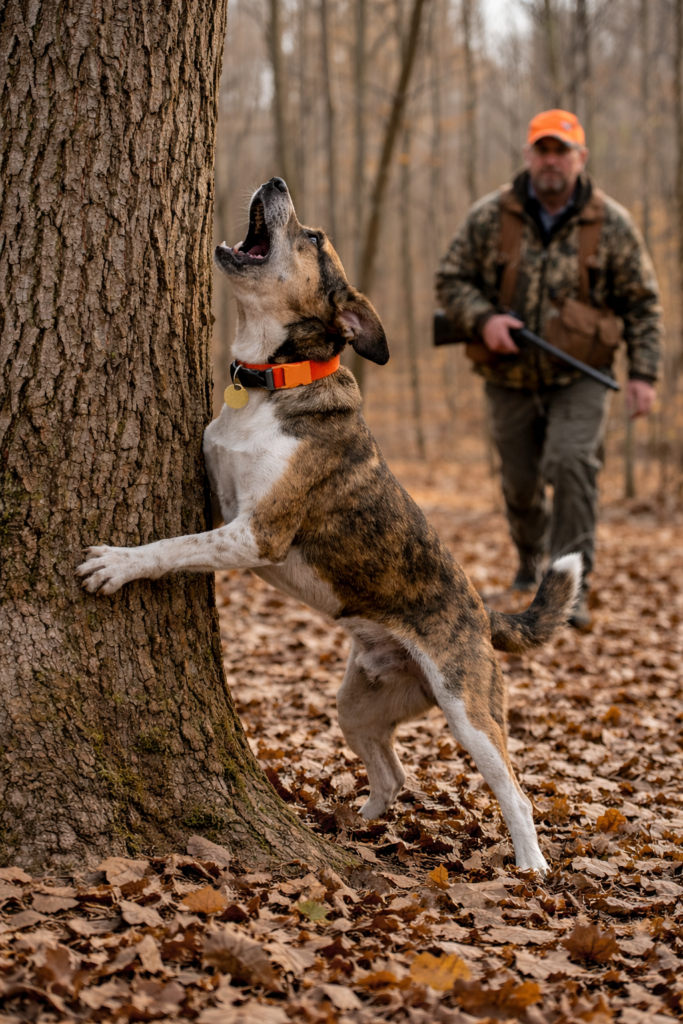
A young squirrel dog works a track, trees hard, and you walk in expecting to see a squirrel looking down. You shine the tree. Nothing. The dog keeps hammering.
And that internal voice starts talking.
He should know better. He’s guessing. I need to fix this now.
So you correct. Maybe not harshly. Maybe just enough to “let him know.”
But here’s the question most people never stop to ask: Did he understand what he did wrong? Or was he still trying to figure it out?
Too much correction doesn’t usually create dramatic failures. It creates hesitation. And hesitation is deadly in a squirrel dog.
The Correction Instinct
Most handlers don’t overcorrect because they’re mean. They do it because they care. They want accuracy, progress, and a dog that doesn’t waste time. They want standards.
The problem is that caring without timing turns into pressure at the wrong moment.
When a young dog misses a tree, trees short, or struggles on a tough track, it’s easy to assume disobedience. But early on, most mistakes aren’t disobedience. They’re confused. And correcting confusion teaches the dog one thing: don’t risk being wrong.
That’s not what you want in a young squirrel dog.
Confusion vs. Disobedience
This is where most training goes sideways. A dog that doesn’t understand is not the same as a dog that refuses to listen.
A young squirrel dog might tree because scent is pooled in one spot. He might lose a track and guess at the most obvious tree. He might miss a squirrel that timbered out, or get excited and overcommit too early.
That isn’t rebellion. That’s learning.
If you apply pressure before the dog has clarity, you don’t create accuracy, you create caution. And cautious squirrel dogs don’t hunt with freedom. They hunt, looking back over their shoulder.
What Too Much Pressure Actually Creates
Pressure applied too early changes behavior, just not in the way you think.
You start seeing a dog that checks back constantly. A dog that hesitates when scent gets thin. A dog that won’t commit to a tree. A dog that hunts tight instead of ranging naturally.
On the surface, that may look like improved control. Underneath, there is uncertainty.
A squirrel dog needs confidence to slow down, work a track, and stay put when he believes he’s right. If he’s worried about being wrong more than he’s focused on being right, his development stalls. And once hesitation becomes a habit, it’s hard to remove.
The Difference Between Standards and Suppression
None of this means you lower your standards. Accuracy still matters. Trash running still gets corrected. Repeated, known behavior still requires accountability.
But accountability only works when the dog understands the job. If a dog has shown he can work a track correctly, knows how to finish, and understands what you expect, and then chooses something else, that’s different. That’s when correction has meaning.
Correction without understanding is noise. Correction with understanding becomes information.
The Timing Framework: When to Correct a Young Squirrel Dog
There are stages in building a squirrel dog. Pressure belongs in different places depending on the stage.
Stage 1: Exposure
The dog is learning what scent is. Learning how tracks move. Learning what a squirrel does in daylight. Pressure here should be almost nonexistent. Let mistakes happen. Let confusion sort itself out. Let the dog experience success without fear attached to failure.
Stage 2: Understanding
Now the dog has seen enough to recognize patterns. He’s slowing down naturally, working tracks with purpose, and showing signs of commitment. This is where light, well-timed correction starts to matter, not punishment, just clarity. If he clearly guesses instead of working, reset him. If he rushes a tree without track movement, walk him off and try again. This stage is about sharpening.
Stage 3: Pattern
The dog knows the job. He’s shown consistency and demonstrated understanding. Now standards rise. Repeated guessing gets addressed. Trash running gets corrected. Sloppy trees after proven ability get held accountable. Because now he understands what’s expected.
Pressure only works when it matches the dog’s level of understanding.
A Common Scenario: Should You Correct a Squirrel Dog on a Slick Tree?
A young squirrel dog trees hard. You shine. You don’t see anything. You assume a slick tree. But what if the squirrel bailed before you got there? What if the leaves are thick, or you didn’t take time to search carefully? What if the dog was right, but you were impatient?
If you correct in that moment, you’ve punished commitment. Do that enough times, and the dog will start second-guessing himself. Squirrel hunting in daylight exposes mistakes fast, yours and the dog’s.
Correction should be measured, not emotional.
How to Rebuild Confidence in a Young Hunting Dog
Most dogs can recover from too much pressure. Start by easing off. Shorter hunts. Fewer corrections. More observation. Let the dog show you what he understands without interrupting every imperfection.
Rebuild confidence through success. Let him work tracks without interference. Let him stay treed without tension in your voice or posture. You’re not lowering standards. You’re rebuilding clarity.
If you want the full framework for building a squirrel dog that stays honest and confident in daylight, start here: Squirrel Dog Training: How to Build a Squirrel Treer That Stays Honest.
Final Thoughts
Squirrel dogs need freedom to learn. They also need standards. The mistake isn’t having expectations. The mistake is applying pressure before the dog has the tools to meet them.
Too much correction doesn’t make a dog accurate. It makes him cautious. And a cautious squirrel dog never becomes the kind you trust alone in the woods.
Build understanding first. Apply pressure when it has meaning. Let confidence grow before you demand perfection.
That balance is what separates dogs that last from dogs that fade out before their prime.
When Should You Correct a Young Squirrel Dog?
Correction should match understanding. If the dog doesn’t know what he did wrong, pressure creates confusion, not clarity.
Can Too Much Correction Kill Drive?
Yes. Overcorrection often creates hesitation. The dog stops making decisions and starts looking to avoid mistakes instead of hunting.
How Do You Correct a Squirrel Dog the Right Way?
Correct only clear repeated mistakes
Match pressure to maturity
Avoid emotional reactions
Focus more on structure than punishment
If tree quitting is a problem you’ve seen, check out our breakdown on why a squirrel dog sometimes quits the tree to understand the common triggers and how they tie into pressure.”
Avoiding proper tree checks is often confusion, not defiance, see our guide on when a squirrel dog skips proper tree checks for tips on fixing that pattern.