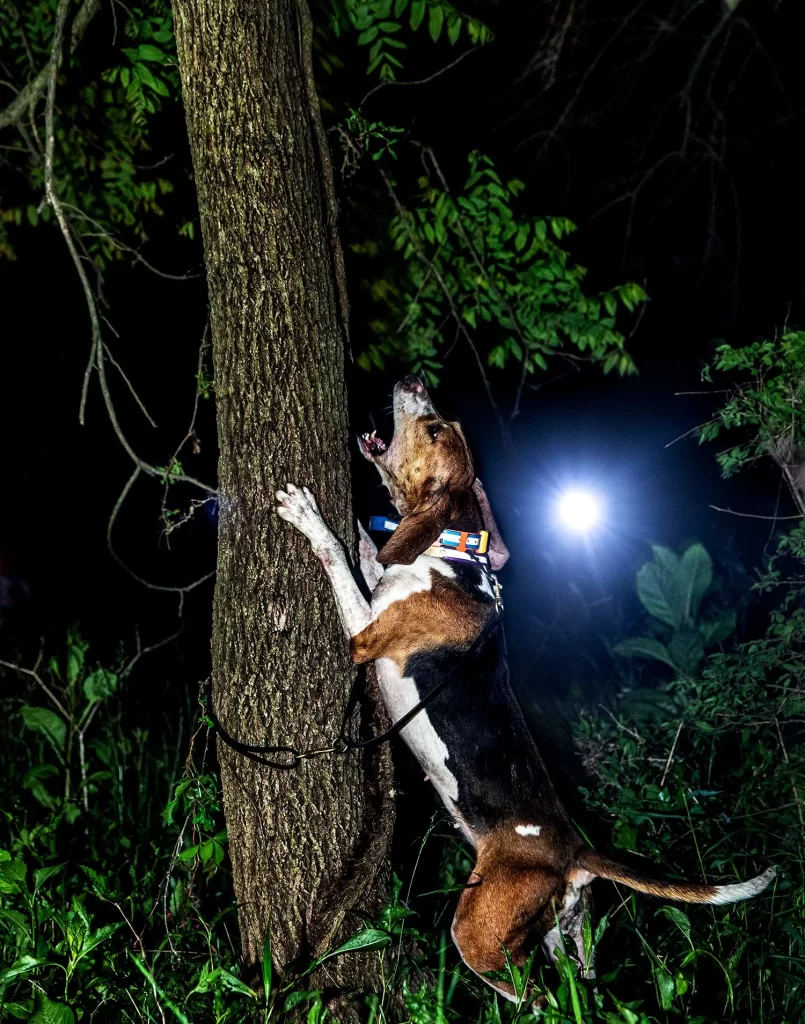
You don’t have a fast coonhound.
You have a guessing coonhound.
There’s a difference.
A dog that slams a tree in five minutes feels impressive. Until you shine it and find nothing. Then it’s not speed. It’s a shortcut.
If your coonhound trees fast but has no coon, the problem isn’t tree power. It’s decision-making. And if you don’t fix it early, slick trees turn into a bad habit.
Fast treeing gets praised. Accuracy wins hunts.
Let’s break down what’s really happening.
What’s Actually Happening
When a hound trees too fast and comes up empty, it usually means one thing: he is committing before the track is finished.
That can come from:
- Track pressure
- Competition pressure
- Overcorrection for trailing
- Breeding for early tree power
- Inexperience
Some dogs are wired to locate and slam a tree the second scent lifts. That looks exciting. But excitement and correctness are not the same.
A coonhound that consistently trees before confirming the track end is guessing. And guessing becomes a habit if it pays off.
Why It Happens
- He Was Pushed to Be Quick
If you praised speed early, hunted him with fast dogs, or got excited every time he treed quick, you may have unintentionally rewarded premature commitment.
Young hounds read tone and pressure better than people think. If speed is celebrated more than accuracy, speed wins.
- He Lacks Track Maturity
Some hounds simply haven’t learned how to finish a track. They can move scent. They can drift it. But when it gets tough, instead of working it out, they grab the nearest tree and declare victory.
That’s not stubbornness. That’s immaturity. Track finishing is learned through exposure, not force.
- He Is Avoiding Pressure
If you have corrected him heavily for boo-hooing a track or not moving fast enough, he may have learned that trailing is risky. Treeing ends pressure. So he trees.
This is more common than people admit.
- He’s Hunting His Head, Not His Nose
High-drive dogs sometimes override their nose. They get excited. They anticipate. They tree where they expect the coon to be, not where the scent actually ends. That is a mental discipline issue, not a talent issue.
How to Fix It
Do not try to slow him down. That’s where most people mess up. You don’t want less tree power. You want better decision-making before the tree.
Step 1: Hunt Him Alone
Remove competition variables. When a dog trees fast with company, you don’t know if it’s confidence or pressure. Alone tells the truth.
Step 2: Stop Rewarding Empty Speed
If he trees slick, do not pet him up. Do not encourage him. Keep it neutral. You don’t need to blow him up. Just don’t let slick trees feel like wins.
Step 3: Increase Tough Track Exposure
Hunt him in colder conditions occasionally. Edges. Creek bottoms. Places where tracks require finishing. Do not overdo it. But let him learn that quitting the track early does not pay.
Step 4: Correct Confirmed Slick Trees Only
This is where timing matters. If you are absolutely certain the tree is empty, and he has shown a pattern of guessing, correction can be appropriate. But if you are unsure, do not guess at punishment. That creates hesitation and confusion.
What Most Handlers Get Wrong
They think fast treeing equals talent. It doesn’t. Accuracy equals talent.
Many young hounds that tree quickly and loud at ten months are still slicking a high percentage of their trees at two years old because the behavior was never tightened up.
Handlers also:
- Compare to the competition dogs too early
- Hunt in thin coon areas and blame the dog
- Overcorrect instead of adjusting exposure
- Ignore track work and only judge tree style
A balanced hound must finish tracks before it commits. Speed without accuracy is noise.
When to Leave It Alone
If he is under a year old, slick trees are occasional (not habitual), accuracy is improving over time, or you are hunting thin coon territory, you may not need a heavy fix.
Young dogs go through phases. Especially ones bred for strong tree instinct. If accuracy is trending upward month to month, leave it alone and let maturity do its job.
If slick trees are increasing, or he is consistently grabbing the first available tree on tough tracks, then it is time to tighten things up.
The Bigger Picture
Fast treeing with no coon is rarely about tree instinct alone. It ties back to how the dog was handled during the early trailing stages.
If you want to understand how to balance track development with tree power, read the full coonhound training breakdown at /coonhound-training/.
The goal is not a loud dog. The goal is a right dog.
Final Word
A coonhound that trees fast but has no coon is not always a bad dog. Often, he is a talented dog pointed slightly in the wrong direction.
Do not crush tree power trying to fix accuracy. Refine the decision before the tree. Protect confidence. Correct only what you are certain of.
Accuracy built slowly lasts longer than speed built on guesswork.