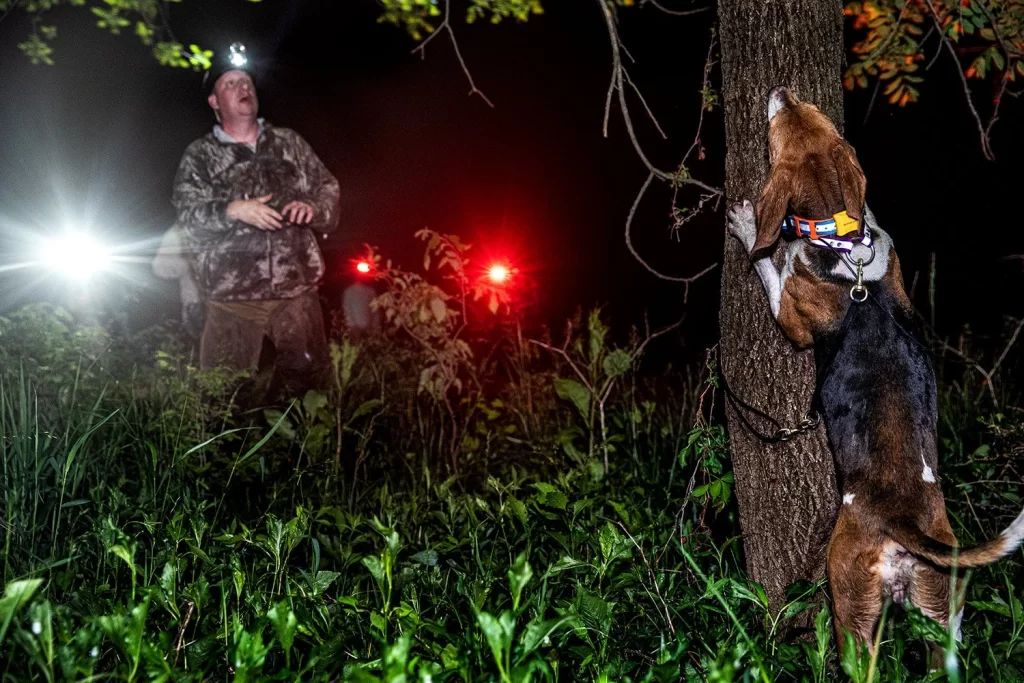
Every coonhound will run trash at some point.
Deer. Fox. Coyote. Armadillo. Whatever moves through your woods.
The real question is not whether it will happen. The question is when you correct it.
Correct too early, and you create hesitation on legitimate tracks. Correcting too late and the behavior becomes a habit.
If you want a straight answer, here it is:
Correct confirmed trash running. Not suspicion.
That sounds simple. Most handlers get it wrong.
What’s Actually Happening
When a coonhound runs trash, one of three things is usually happening:
- He does not know the difference yet
- He is testing boundaries
- He is choosing the hotter track
Young dogs especially, will take the hottest scent in front of them. Deer often smell stronger than coon. That is not rebellion. That is instinct.
The mistake handlers make is assuming the dog “knows better” before he actually does. If the dog has never clearly understood what is acceptable game, correction creates confusion.
Why It Happens
There are a handful of consistent reasons trash running shows up, and understanding them shapes how you respond.
- Scent intensity. Off-game often lays a stronger scent trail than coon, especially fresh deer on a warm night.
- Lack of exposure. A dog that has not run enough clean coon tracks has not built the preference for the right game.
- Pressure and excitement. A young dog can get wound up and follow the first hot track he crosses, right or wrong.
- Hunting in areas loaded with deer and thin on coon stacks the deck against the dog.
- A dog that has been allowed to run deer repeatedly without correction will keep doing it. The behavior reinforces itself.
How to Fix It
This is where most handlers either over-correct or under-correct. The goal is clarity, not fear.
Step 1: Confirm What He Is Running
Do not guess. If you have Garmin or Dogtra, watch the track. A straight-line sprint across an open field at 20 mph is deer. A winding, methodical track in a creek bottom is more likely coon. You saw the deer jump, or you did not. Either you know, or you do not correct.
Step 2: Verify He Has the Foundation to Know Better
If this dog has clean coon tracks under his belt and suddenly switches to deer, that is a choice. Choice deserves correction. But if this is his fourth hunt ever, that is education, not defiance. Handle it accordingly.
Step 3: Correct at the Right Moment
Correction must happen at the moment of the offense. Not at the truck. Not five minutes later. Not after he switches back. Delayed correction teaches nothing except fear of an unknown cause.
Step 4: Match Intensity to the Behavior
A young dog bumping a deer track for the first time does not need maximum pressure. A seasoned dog that has consistently chosen deer after months of training does. Use the correction that fits the situation.
Step 5: End the Hunt on a Win
After correction, give him the opportunity to find the right track. You do not want the session to end in punishment. Finish on success whenever possible.
What Most Handlers Get Wrong
They correct out of frustration, not confirmed evidence.
They assume speed equals trash. Hard running is not proof of off-game. Some dogs just run hard.
They assume a long race equals deer. Not necessarily. A cold coon track can take time.
They correct because someone else said “he’s trashy.” Another hunter’s opinion is not confirmation.
Or they wait too long and allow the behavior to repeat a dozen times before stepping in. Both extremes create problems. Too soft builds bad habits. Too hard builds hesitation. The balance is in the timing.
When to Leave It Alone
There are times trash running should be managed instead of punished. Leave correction alone when:
- The dog is extremely young and still building scent discrimination.
- You are not completely certain what he is running.
- The dog self-corrects and checks back on his own.
- The hunting area is saturated with off-game and short on coon scent.
Some trash running phases burn out naturally with maturity and exposure. Overcorrecting during that phase creates a dog that gets cautious and loses drive. That is a harder fix than patience would have been.
For a full breakdown of building game clarity in a coonhound from the ground up, read the complete guide at: /coonhound-training/
Final Word
Correct a coonhound for running trash when you are certain of what he is running, when he has the experience to know better, and when you can correct at the moment it is happening.
Do not correct on suspicion. Do not correct out of frustration. Do not correct to prove a point.
Game clarity is built through exposure and timing, not anger.
Clarity builds finished dogs. Emotion builds problems.