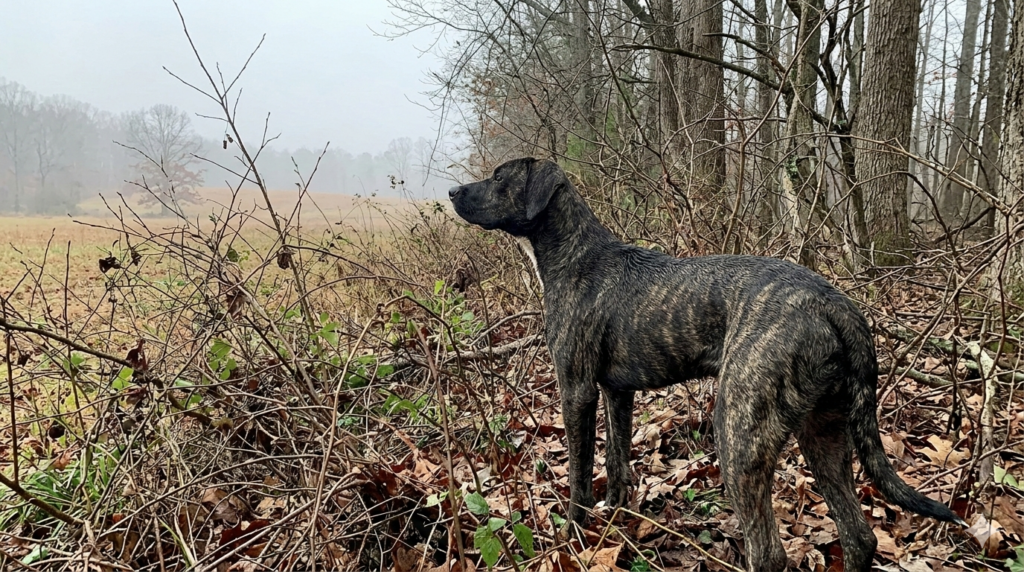
Six months ago that dog was gone. You’d step out of the truck, give it thirty seconds, and it would disappear into the timber. Seven hundred yards out, eight hundred, threading through the deadfalls and creek drainages without looking back once. You kept up with it by listening.
Now it quarters out three hundred yards, swings left, comes back, swings right, comes back. Still, trees squirrels when it crosses them. Still works hard inside that bubble. But the bubble is smaller, and you did not make it that way. Or so it feels.
Here is the first thing worth understanding. Dogs do not randomly redraw their boundaries. Something in the environment changed, something in the dog’s experience changed, or something in how you hunted it changed. That is not blame. It is just how dogs work. Before attempting to fix anything, you need to identify which one you are dealing with.
What the Range Looked Like Before
Young dogs that hunt big early are often running on confidence born from instinct. They have not been burned yet. They have not experienced hunting hard for two hours through cold, dry timber and coming up empty. They go because nothing has told them not to.
That early range is real, but it is partly reckless. The dog is operating on drive before it has learned how to use that drive efficiently. A big range in a young dog can be impressive to watch. It does not always translate directly into a mature hunting style.
Some of the best squirrel dogs tighten their range between eight months and two years, then widen back out once they learn where squirrels actually are. They stop burning ground for no reason. They start reading terrain, thermals, and sign. A dog hunting a river bottom in October is working differently than it was hunting cutover timber in August. The conditions change, and a smart dog adjusts.
What Changed (and What Always Does)
You said you did not make any intentional changes. That is worth noting. But intentional and behavioral are two different things. Even when a handler does not consciously change anything, something in their pattern almost always shifts. You walked toward the tree a few more times than usual. You called the dog in a little sooner. You hunted it tired. You hunted shorter days. None of those feel like training decisions in the moment. They add up anyway.
Think about the last several hunts. Was squirrel activity low? Did the dog hunt hard and come up empty repeatedly? Repeated failure in young dogs does not always produce a dog that tries harder. Sometimes it produces a dog that recalibrates. It starts hunting where it found squirrels before. It starts staying closer to areas it knows. That is not a weakness. That is problem-solving.
Weather matters here, too. Cold fronts that shut down squirrel movement affect how a young dog interprets the woods. If it hunted three or four mornings in a row where scent was low and activity was down, it may have learned that pushing deep costs more than it returns.
Also consider hunting pressure. If other hunters have been working your timber, or if foot traffic increased through late season, squirrel patterns shift, and scent conditions get muddied. A dog reading disrupted sign and pressured game has less reason to push into areas that have gone quiet. Range contraction in pressured timber is a logical response, not a character flaw.
Is This Development or Drift?
There is a difference between a dog that is developing its hunting strategy and a dog that is drifting toward handler dependence. The first is a natural stage. The second is a problem that compounds if you ignore it.
A dog in a natural development phase will still leave you. It will still make independent decisions. It trees what it finds without looking back for permission. It just is not going as far as it used to. The hunting is still self-directed.
A dog drifting toward dependence starts checking in. It circles back to you before it has actually hunted the ground. It stalls when you stop walking. It trees a squirrel and then looks to you before committing fully.
Here is the line. If the dog begins hunting you instead of the timber, that is the moment you intervene.
Not when the range tightens. Not when it checks in once or twice. The line is when the dog’s primary orientation shifts from the woods to you. At that point, waiting it out is no longer a reasonable option.
The dog you described sounds like it is still on the right side of that line. It is making decisions. It is finishing on game. The range contracted, but the independence held. That distinction matters more than the yardage number.
What the Dog Is Telling You
A young dog that pulls back its range but stays on game is usually telling you one of three things.
It learned where the squirrels are. Dense mast timber, creek drainages with food and water, and southern slopes in cold weather. A dog that has been hunting the same area multiple times may have figured out that the squirrels are not in the far timber. Hunting 300 yards and finding game is better logic than hunting 800 yards and finding nothing.
It is in a natural confidence dip. Young dogs go through phases where instinct leads the charge before experience catches up. When experience starts filling in, the reckless confidence slows. The dog is building something more durable. Range often returns once that foundation settles.
It needs new ground. If you have been hunting the same woods consistently, the dog has already mapped it. There is less drive to push deep into terrain it already knows is empty. New timber with real pressure and fresh sign has a way of pulling the range back out of a dog that has gone stale on familiar ground.
This is part of why steady exposure to varied terrain matters throughout development. You can read more about building that foundation in our squirrel dog training resources.
Devil’s Advocate
Some handlers read this situation and convince themselves it is all fine. Development phase, natural adjustment, the dog knows what it is doing. And sometimes that is right.
But here is what gets missed. Even without intentional changes, handler behavior leaves a pattern. If you have been hunting with the dog on a lead for longer stretches, calling it in more than you used to, hunting it paired with a dog that works close, or consistently positioning yourself between it and the deep timber, those patterns accumulate. You said nothing intentionally changed. That may be true. But unintentional changes train dogs just as effectively.
Also consider this. A dog that consistently finds squirrels inside 300 yards has no incentive to push past 300 yards. If squirrel populations in your primary area thinned late season and the dog is keying on what is left, the logic is sound, but the habit can calcify. Take it to new ground with real squirrel pressure and see what happens. If it opens back up, you have your answer. If it stays tight on fresh timber with good conditions and no hunting pressure, now you have something worth addressing directly.
What to Do About It
Start with new ground. This is the lowest-intervention step and often the only one you need. Pick timber you have not hunted this season, somewhere with known squirrel sign and low human disturbance. Put the dog down and walk slowly. Give it time to read the new environment. Do not push it out. Let it decide how far to go.
Do not follow the dog. If you are walking toward every tree the dog hits, calling it in to show you squirrels, or consistently positioning yourself between it and the deep timber, you are training it to orient toward you. Walk away from it. Let the dog bring news to you, not the other way around.
Reduce check-in rewards. If you praise the dog every time it swings back past you, you are building a return loop. A brief acknowledgment is fine. Do not make a fuss of every check-in. The dog should feel like coming back to you is neutral, not a highlight.
Hunt it alone. If it has been running with another dog that works a tight pattern, that influence matters. Put it down solo in good timber and watch how it hunts without a pairing pulling its range in.
Give it time. If none of the above reveal a clear handler-caused problem, and the dog is still making independent decisions and finishing on game, let a few more weeks pass. Young dogs renegotiate their strategies more than once in the first two years. This may not be the final version of what you are working with.
Quick Fix Checklist
- Take the dog to fresh timber with low hunting pressure
- Walk away from the dog, not toward it
- Stop rewarding every check-in with attention
- Hunt it solo if it has been paired with a close-working dog
- Watch for the line: is the dog hunting the timber or hunting you
- Avoid calling the dog in unless necessary
- Consider whether increased hunting pressure changed squirrel patterns in your primary area
- Give it two to three hunts on new ground before drawing conclusions
Closing
Range is not the measure of a squirrel dog. What happens inside the range is.
A dog that hunts 300 yards with purpose, finds game, trees it clean, and makes independent decisions is doing its job. If the range contracted because the dog got smarter about where squirrels live in your timber, that is not a problem. That is the dog becoming a better hunter than it was in August.
Watch the behavior inside the bubble before you decide the bubble itself is broken.