|
Quick Answer: How to Catch Crappie from the Bank in Spring During the spring spawn, crappie move into water as shallow as 1 to 4 feet near protected banks. Target coves, creek arms, laydowns, dock corners, and hard-bottom pockets. Use a 7-foot ultralight rod with 4- to 6-lb line, a small float, and a 1/32 to 1/16 oz jig. Fish slowly. Let your bait sit. The fish come to you during this window. |
You Don’t Need a Boat in the Spring
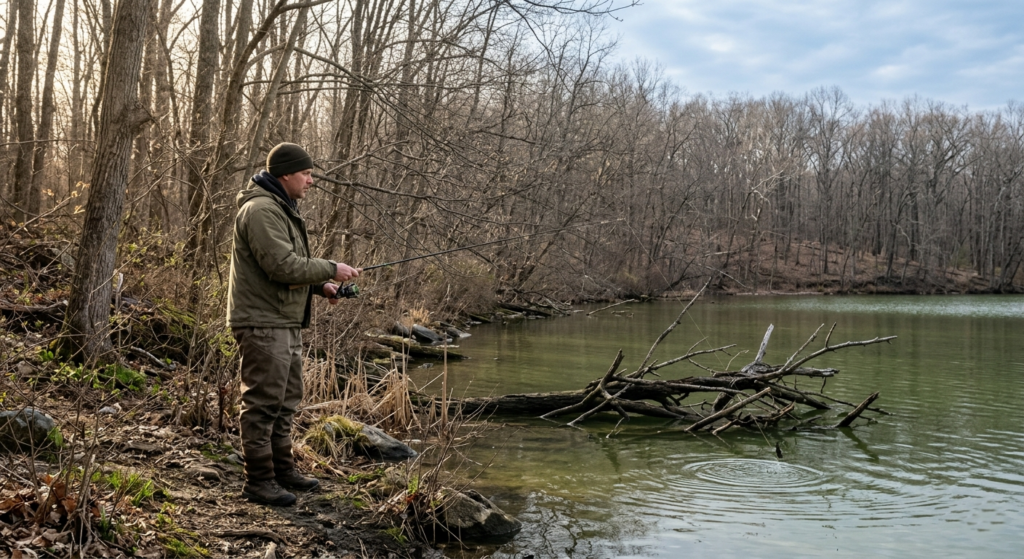
You don’t need a boat to catch crappie in the spring. That might sound like consolation, but it’s the plain truth. From late March through May across most of the country, crappie do something that completely levels the playing field for bank anglers: they move shallow. And shallow means close to you.
The spawn is what makes crappie fishing from the bank in spring as good as it gets. For a few weeks every year, fish that spend the rest of their lives buried in deep brush piles and submerged timber slide right up to the edges, tight against the bank, sitting in water you can reach with a simple rod and a small jig. Bank anglers who know what to look for catch real fish during this window. It just takes understanding what’s driving the fish and knowing where to put yourself.
This is what you need to know.
Why Crappie Come to the Bank in Spring
Spring crappie behavior comes down to one thing: the spawn.
As water temperatures climb through the mid to upper 50s, crappie begin staging. They haven’t fully committed to the shallows yet, but they’re moving. Males lead the way, pushing into protected pockets, coves, and creek arms, looking for hard bottom with some kind of cover. Root mats, gravel patches, laydowns, dock pilings, flooded brush. They fan out small nests and wait. Then the females come in.
This movement can last several weeks. It doesn’t happen all at once. Different parts of the lake warm at different rates, so you can find pre-spawn fish staging in eight feet of water at the same time other fish are actively on nests in two feet. The Missouri Department of Conservation notes that crappie typically spawn when water temperatures reach 55 degrees F, and that in stained or murky water they may be as shallow as one to two feet.
For more on how water conditions change the spring bite, see our guide on catching crappie in muddy water during spring. Those same principles apply when runoff muddies up your bank spots.
What all of this means for bank anglers is genuine opportunity. Spawning crappie are not difficult to catch on a good day. They are territorial, they are shallow, and they will bite. The trick is showing up with the right mindset and knowing where to walk.
The window to take advantage of this closes faster than most people realize. Once water temps push consistently past the mid-60s, fish scatter and return to deeper summer structure. That’s why timing matters, and why crappie fishing from the bank in spring is worth making a priority while the window is open.
How to Read the Bank and Find the Right Spots
Not every inch of shoreline holds crappie in the spring, and walking the bank randomly doesn’t work. You have to read the water.
Start by looking for protected water. Crappie don’t like to spawn on exposed, windblown banks. They want calmer, sheltered areas that warm up faster than the main lake. Coves, creek arms, pockets, and bays are where you want to be. On a small pond, that might be the corner away from the prevailing wind. On a reservoir, head toward the back third of a creek arm.
Inside that protected water, look for these features:
- Laydowns and fallen timber close to the bank are the most consistent producers. Crappie stack right against that wood, especially where branches are submerged in two to four feet of water.
- Dock corners, boat ramp edges, and bridge pilings give fish a vertical reference point. The shade from a dock holds fish on bright sunny afternoons when the shallows get too exposed.
- Points that jut out from the bank into slightly deeper water are staging zones. Pre-spawn fish often hold just off the end of a point before committing to the shallows.
- Hard bottom matters more than most bank anglers realize. A bank with sand, gravel, or compacted clay holds more crappie than one with soft silt. When you’re deciding where to walk, look for spots where the bottom composition changes.
|
Bank Angler’s Tip: Work the Transition First Before you fish the skinny water, work the transition zone between shallow and slightly deeper water. If you’ve got a drop to six or eight feet accessible from the bank, especially near cover, fish that edge first. Pre-spawn fish waiting to commit are still very catchable, and you’ll find them here before they push all the way in. |
The Right Gear Setup for Bank Fishing Crappie
You don’t need a lot of gear, but having the right setup makes a real difference when fish are finicky or cover is tight.
Rod and Reel
A 7-foot ultralight or light-power spinning rod is what you want for this situation. The extra length helps you reach cover from the bank, place a jig precisely, and keep the line off the water without moving your presentation too fast. Anything shorter and you’ll find yourself standing closer to fish than you should be. Pair it with a small 1000 or 2000 series spinning reel. Nothing fancy required.
Line
Four to 4lb monofilament or fluorocarbon handles most spring crappie situations from the bank. Fluorocarbon has the edge in clear water because it nearly disappears underwater. In stained or murky water, monofilament is fine and casts a bit more easily. If you prefer the sensitivity of braid, spool with 8-pound braid and add a 2- to 3-foot fluorocarbon leader.
Float, Jigs, and Hooks
A small slip float or spring bobber set to fish at 1.5 to 3 feet of depth is one of the simplest and most effective bank setups for spawn-oriented crappie. You can watch the float, adjust depth quickly, and cover a lot of water with slow retrieves along the bank.
Jigs heads from 1/32 to 1/16 ounce are the best all around size. You can use painted or unpainted. Smaller jigs work better in cold, clear water with light bites. Slightly heavier heads cut wind better and sink a little faster when you need to get down four to six feet on staging fish.
Live minnows on a small Tru Turn Aberdeen hook and float are hard to beat when the bite gets finicky. A single small fathead or crappie minnow, hooked lightly through the lips and suspended under a bobber, is the simplest and often the most effective spring bank setup there is.
Colors, Depth, and How to Fish It
Color selection for spring bank crappie doesn’t need to be complicated. There are two simple rules: match water clarity and adjust for light conditions.
|
Condition |
Best Colors |
Avoid |
|
Clear water |
White, smoke, pearl, pink/white, light chartreuse |
Overly bright or opaque colors |
|
Stained / murky |
Chartreuse, yellow, orange, black, electric chicken |
Natural shad colors |
|
Overcast / low light |
Brighter colors across the board |
Dark subtle colors |
How you fish the bait matters as much as color. When crappie are actively on nests, they will bite a bait that barely moves. Cast near cover, let it settle under the float, and wait. Sometimes the fish hits before you even do anything. If nothing happens in thirty seconds, give it one slow lift of the rod tip and let it fall again. That fall is usually when the strike comes.
If the fish seem less aggressive, a slow swimming retrieve just under the float works well. Keep it slower than you think you need to. Spring crappie on the bank are almost never chasing fast-moving baits.
How to Work the Bank Step by Step
|
1 |
Approach quietly Spawning crappie are in very shallow water. They can see you, hear your footsteps on the bank, and feel ground vibration. Slow down, stay low, and cast well past your target before working back toward the cover you want to fish. |
|
2 |
Fish the staging zone first Before you work the shallowest water, cast to the transition at four to eight feet near any visible cover. Pre-spawn fish are still catchable here and you’ll avoid spooking fish that are tighter to the bank. |
|
3 |
Cast past the cover and work in Don’t cast directly onto the spot. Land your jig two to three feet past the laydown, dock corner, or brush and slowly retrieve it into the strike zone. This keeps you from dropping the bait on top of fish that are holding tight. |
|
4 |
Let it sit and lift slowly Cast near cover, let the float settle, and give it 20 to 30 seconds. One slow lift, let it fall back. Repeat two or three times before moving. If no bite, take two steps down the bank and repeat. |
|
5 |
Keep moving This is active fishing, not waiting. If a spot doesn’t produce in a few casts, move on. Cover water methodically and you’ll find where the fish are. When you get a bite, slow down and work that zone thoroughly before moving on. |
Mistakes That Cost Bank Anglers Fish
Most bank fishing mistakes fall into one of two categories: spooking fish before you cast, or fishing at the wrong depth.
Getting too close too fast
This is the biggest one. Crappie in two feet of water are extremely aware of their surroundings. Take your time approaching any spot. Walk slowly, avoid stomping or dragging your feet, and keep your shadow off the water if possible.
Fishing too deep
Bank anglers often default to heavier jigs that sink too fast and end up fishing at five or six feet when the fish are sitting in two to three. Set your float shallower than feels right and adjust from there.
Setting the hook too hard
Crappie have thin mouths, and light wire hooks tear out easily. A firm lift of the rod is all you need. A hard hookset pulls the hook right through. You want to feel resistance, then apply steady pressure.
Ignoring weather changes
Spring cold fronts push crappie off the beds and into slightly deeper water fast. If you had a great bite yesterday and can’t find a fish today, the cold front is usually why. Check out our full breakdown on what to do when crappie stop biting after a spring cold front before you pack up and leave.
Fishing one spot too long
Bank fishing in spring is active. If you’ve had no bite in ten minutes at one spot, move down the bank. You’re looking for fish, not waiting on them to come to you.
Adjustments for Changing Conditions
|
Cold Front Aftermath After a front pushes through, crappie retreat from the shallowest water and suspend just outside the beds in slightly deeper cover. Drop your presentation to four to six feet, slow your retrieve way down, and downsize your jig to 1/32 oz or smaller. The fish are still there. They’re just less aggressive and less willing to move. |
|
Windy Days Don’t automatically head for the calm bank. Wind chops up the surface and makes crappie feel less exposed in shallow water. The windblown side of a cove often pushes baitfish against the bank, which draws crappie in. Fish the calmer, protected side for spawning fish, but don’t ignore the wind-exposed bank when fish aren’t on nests yet. |
|
Rising Water When a lake or pond comes up after rain, crappie move shallower fast and often slide into newly flooded grass or brush along the bank. This can be one of the best bite windows of the spring season. Fish the absolute shallowest reachable cover and stay tight to the new waterline. |
|
Falling Water The opposite of rising water. Fish pull off the bank quickly when levels drop. Shift your presentation toward slightly deeper water and follow fish toward the ends of points and channel edges. The staging zone becomes your primary target again. |
|
Further Reading: Crappie Behavior and Seasonal Patterns The Missouri Department of Conservation maintains one of the best free crappie fishing resources online, covering spawning behavior, depth, and seasonal movement across all four seasons. Worth bookmarking: mdc.mo.gov crappie tips |
Frequently Asked Questions
|
What is the best rig for crappie fishing from the bank in spring? |
|
A small float, 4- to 6-lb line, and a 1/32 to 1/16 oz jig or curly tail fished at 1.5 to 3 feet of depth handles most situations. Live minnows under the same setup are hard to beat when the bite is slow or the fish are very shallow and picking at baits. |
|
What depth should I target when bank fishing for crappie in spring? |
|
During the spawn itself, 1 to 4 feet is where most fish will be. Before the spawn peaks, work 4 to 8 feet near staging cover like points, dock edges, and channel bends. If you can’t get bites in the shallows, go slightly deeper and slow way down. |
|
Can you catch crappie from the bank without electronics? |
|
Yes, and spring bank fishing is one of the few situations where electronics give you almost no advantage. The fish are shallow, the cover is visible, and reading the bank is something you can do with your eyes. A float and a jig is all you need. |
|
What time of day is best for bank fishing crappie in spring? |
|
Early morning and late afternoon are the most consistent windows. Midday on sunny, warm days often slows down as fish move to shaded cover or slide slightly deeper. Overcast days can produce good bites throughout the entire day. |
|
What is the best jig color for bank crappie in spring? |
|
In clear water, start with white, pink/white, or natural shad colors. In stained or murky water, go with chartreuse, yellow, or black. When in doubt, pink/white in clear water and chartreuse in stained water cover most spring situations across the country. |
What to Do on Your Next Trip
Spring bank fishing for crappie is as good as it gets in freshwater fishing for someone without a boat. The fish are accessible, the tactics are simple, and the window is real every single year. Find protected water, look for cover in two to four feet, move quietly along the bank, and fish slowly. That is most of what it takes.
If the bite shuts down after a weather change, slow down and drop your presentation slightly deeper before packing it in. The fish usually aren’t gone. They’re just a few feet further out.
Get out early in the morning, work the bank methodically, and make the most of this window. It doesn’t stay open long, but while it’s open, it’s hard to beat.