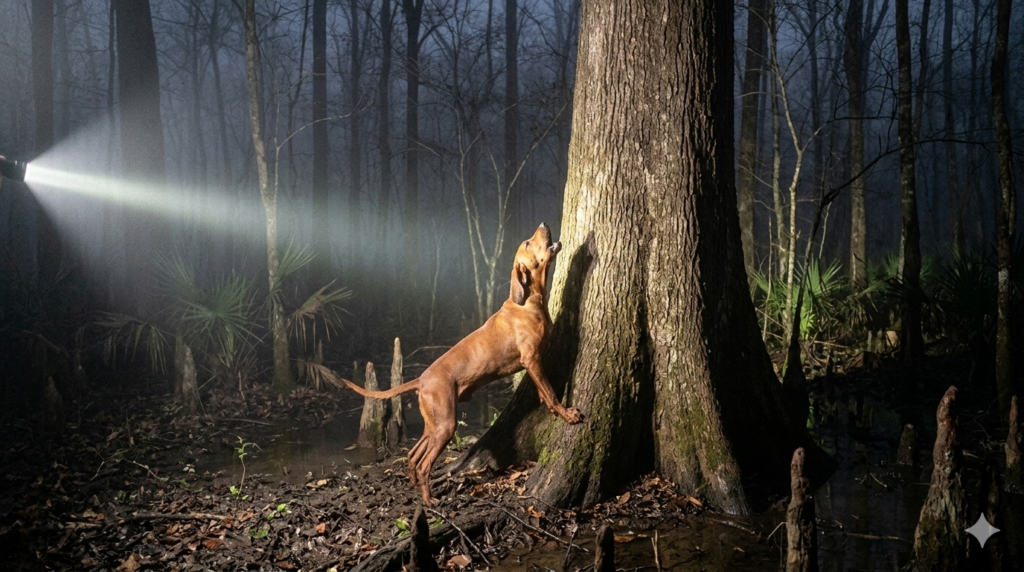
People ask which coonhound breed is best. That question does not have one answer.
Every breed in the coonhound lineup was built to do a specific job well. Some were bred for speed on a hot track. Some were built for cold ground work. Some were designed for rough terrain where most dogs quit. What you need depends on where you hunt, how you hunt, and what you want out of a dog.
There is no wrong breed. There are wrong fits. And a bad fit between a handler and a dog is more expensive than most people realize, in time, in money, and in a dog that never reaches what it was built to do.
Here is a straight look at all six primary coonhound breeds, what they were built for, and what you should know before you buy one.
Treeing Walker Coonhound
The Treeing Walker is the most popular coonhound in the country, and that popularity is earned.
Walkers are fast. They cover ground aggressively and they work a track with confidence. Their locating ability is strong and their bark carries well in heavy timber. In competition hunts, Walkers dominate because they find game first and tree it hard.
That speed is also where things can go sideways. Fast dogs with a lot of drive can sometimes run past the line when the track gets thin, a problem discussed in why some coonhounds blow through tracks.
Walkers are not lazy dogs. They need to hunt. If you do not run them consistently, they will find other outlets for that energy and most of them are destructive.
For a hunter who gets out regularly, covers good country, and wants a dog that competes on a hot track, the Walker is hard to beat. For someone who hunts twice a month and wants a patient dog, there are better options.
Bluetick Coonhound
The Bluetick is built for methodical work. It runs cold.
Where a Walker hammers a hot track hard, the Bluetick is designed to stay committed on older scent. Its nose is exceptional and it does not get frustrated quickly when conditions get difficult. That deep bawl mouth is one of the most recognizable sounds in the woods, and it tells you exactly where the dog is on the track.
Some breeds are known for being more methodical on older scent, but young dogs still have to learn how to work difficult tracks correctly, something covered in detail in teaching a young coonhound to slow down on cold tracks.
Blueticks can be stubborn. They think through problems rather than blasting through them, and newer handlers sometimes read that as being slow or uninterested. It is neither. It is a dog working the way it was designed to work.
If you hunt wet ground, swamps, or areas where tracks are regularly hours old, the Bluetick fits that terrain well.
Black and Tan Coonhound
The Black and Tan is built on endurance and a strong nose. It carries bloodhound ancestry, and that shows in how it approaches a track: deliberate, committed, and hard to pull off.
These dogs are patient hunters. They do not blow up on a check. They work through it, and they can stay on a line longer than most breeds without losing focus. In rough country or extended hunts, that endurance matters.
The Black and Tan can be independent. It was bred to solve scenting problems without constant handler direction, and it will. That is an asset in the field and a challenge in training if you try to micromanage it. Let the dog work and you will see what it is built to do.
This is a breed that rewards patience from the handler. Push it too hard too early and it becomes difficult. Build it right and it is one of the most reliable dogs in the woods.
Redbone Coonhound
The Redbone is one of the most balanced coonhounds in the lineup.
It has solid trailing ability, trees reliably, and it handles varied terrain without breaking down. Redbones are strong swimmers, which makes them effective in river bottom country and areas with heavy water crossings that cut other dogs out of the hunt early.
Their willingness to please makes them easier to work with during training compared to some of the more independent breeds. They read their handler well and they respond to consistent pressure without shutting down.
Redbones are not the fastest dog on a hot track and they are not the coldest-nosed dog in a check. They sit in the middle on both, which makes them a strong all-around choice for a hunter who covers different terrain and hunts a range of conditions throughout the season.
If you want one dog that can do most things adequately, a Redbone from a solid hunting bloodline is a reliable starting point.
American English Coonhound
The American English Coonhound came out of foxhound lines brought to this country in the 1700s, and that ancestry is still visible in how it hunts.
These dogs are fast and they have the endurance to back up that speed across long nights. In pack hunting situations, they perform well because they have a natural instinct to work with other dogs. They drive hard and they have a strong competitive edge that keeps them in the hunt when conditions are tough.
Their speed can create the same issues that show up in Walkers. On a thin track or in changing scent conditions, they can lose the line before they realize it and have to be worked back. That is a trainable problem, but it takes a handler who is paying attention and catches it early.
For night hunts in open country, rolling hills, or agricultural ground where dogs can stretch out and run, the American English fits that terrain well. Tight timber and heavy brush tend to favor slower, more methodical breeds.
Plott Hound
The Plott is different from every other breed on this list.
Where all the other coonhound breeds trace back to foxhound stock brought to America, the Plott descends from German boar-hunting dogs brought over in the 1700s. That history matters because it built a dog with a different kind of grit.
Plotts were designed to bay and hold large, dangerous game. That instinct translates into a dog that does not back down in the tree, does not lose focus when the situation gets physical, and handles steep, difficult mountain terrain that breaks other dogs down.
In the southern Appalachians and similar mountain country, Plotts are a natural fit. They have the leg strength, the trailing instinct, and the toughness to work that kind of ground all night.
They can be harder to start than some of the more eager breeds. They tend to be serious dogs, not flashy ones. But when they are built right and hunting their kind of country, they are formidable.
Bloodlines Matter More Than Breed Name
Breed name tells you what a dog was designed to do. Bloodline tells you whether a specific dog can actually do it.
Hunting ability is not evenly distributed across any breed. There are Walkers that refuse to leave the truck. There are Plotts with no trailing instinct. Buying a breed without researching the bloodline behind a specific dog is guessing. Most people figure that out after the first disappointing season.
When you evaluate a dog, look at what the parents and grandparents produced. Talk to the breeder about what that family of dogs does well and where it has limitations. A breeder who cannot answer that question clearly is a breeder who does not actually hunt those dogs.
Terrain also shapes what traits matter. A dog with a cold nose and patient trailing instinct may be worth more on the wet bottoms of the Deep South than a fast, hot-tracking dog that struggles when the scent drops off. Matching the dog to the ground you hunt matters as much as matching the dog to the breed profile.
For a deeper breakdown of how trailing and treeing ability develops across all these breeds, see the full coonhound training guide.
Handler expectations matter too. Some hunters want a competition dog. Some want a dog that does a reliable job on a casual hunt with family. Some want a single dog that works alone. Some want to run a pack. Each of those scenarios favors different traits, and no single breed delivers everything equally.
Devil’s Advocate
Some hunters will tell you breed does not matter at all. Just get a dog with a good nose and train it right.
That is not wrong, but it skips something important. Breed tendencies are real. A Bluetick is not going to run like a Walker, and a Walker is not going to have a Bluetick’s patience on cold ground. You can train around some of those tendencies, but you cannot train a dog into a different genetic baseline.
The flip side is that some hunters put too much stock in breed and not enough into bloodline, terrain match, and their own ability as a handler. A mediocre handler with a good bloodline will still underperform a skilled handler with a decent dog.
Breed gives you a starting point. Everything else determines where you finish.
Quick Fix Checklist: Choosing the Right Breed
- Research the specific bloodline, not just the breed name
- Match the dog’s trailing style to the terrain you actually hunt
- Know whether you need a cold-nose dog or a hot-track dog
- Talk to hunters who run that bloodline in similar conditions
- Be honest about how often you hunt and how hard you push a dog
- Ask the breeder what the parents and grandparents produced in the field
- Consider whether you want a solo dog or a pack hunter
- Factor in your training experience before picking a high-drive or independent breed
The Bottom Line
All six coonhound breeds were built to hunt and tree game. That is the common ground.
What separates them is style, terrain fit, and the kind of hunting they were designed for. The best breed is the one that matches your ground, your hunting schedule, and your ability to handle what that dog needs. Get that right and the breed name matters less than people think. Get it wrong and no amount of training corrects the mismatch.
Do the work before you buy. A dog from the right bloodline in the right breed for your situation will tell you every time you step into the woods that you made a good decision.