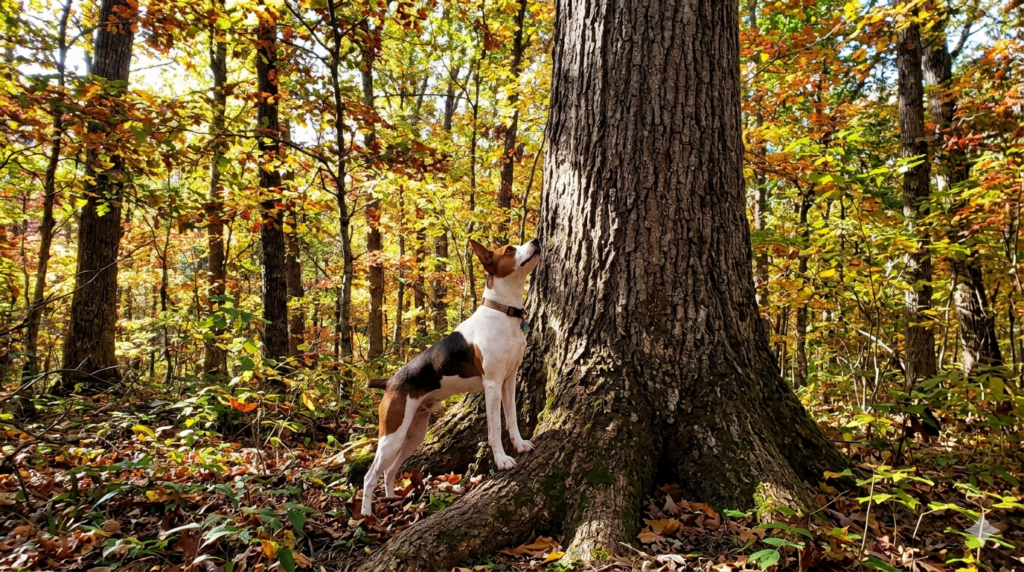
A young squirrel dog that finds game but goes quiet at the tree is not a broken dog. It is an unfinished one. There is a difference, and that difference matters a lot to how you handle the next few months of its development.
Tree barking comes from three things: desire, confidence, and enough repetition to connect the dots. Some pups get there early. Others need more time in the woods before it clicks. What most handlers do not realize is that pushing too hard, too fast, can create worse problems than doing nothing at all.
If you want to understand how the whole foundation piece fits together, start with how to train a tree dog. The goal here is simpler: figure out why a young dog is not committing at the tree, and build that bark the right way.
What Is Actually Happening at That Tree
A lot of handlers think a quiet dog at the tree means the dog does not know what to do. Sometimes that is true. More often, the dog knows the squirrel went up, but it is not sure enough to commit. There is a gap between locating game and staying put to bark about it.
Young dogs see the squirrel go up, lose visual contact, and mentally check out. The scent is up there. The dog can work it. But without enough experience to trust that process, it moves on.
Some pups are tree-minded but quiet by nature. Others are excited but have no idea that staying and barking is what they are supposed to do. Knowing which dog you have matters. If you are not sure whether the pup is genuinely working scent to the tree or just guessing, that article on guessing or actually tracking a squirrel is worth reading before you change anything about how you are hunting the dog.
Watch for these signs in the field. The dog circles the tree but will not bark. It jumps up once or twice and then leaves. It looks back at you, waiting for some kind of cue. Or it only barks when it catches movement in the branches. These are all different problems with different fixes.
Why It Happens
Lack of confidence at the tree. The pup knows game went up but is not sure enough to commit. This is especially common in softer or more cautious young dogs. They need more right reps before they trust themselves enough to stand there and bark.
Too much handler pressure. This is the most common cause and the most fixable. The handler crowds the dog, talks too much, tries to coach it into barking, or rewards in a way that makes the dog look to the human instead of the tree. The pup becomes dependent. Once that happens, it will not bark unless you are standing right there doing something.
Too many easy staged setups. Cage drags and sight chases build excitement. They do not build tree sense. A dog that always sees game is never forced to figure out what happens when the squirrel is hidden. Without that problem-solving piece, it does not know what to do at a quiet tree.
Maturity just is not there yet. Some young dogs have strong hunt drive and good prey instinct long before they have tree sense. That will come. Age and repetition matter. You cannot shortcut it without creating bad habits.
Wrong rewards at the wrong time. Knocking game out before the pup is truly settled and treeing, or leading the dog away before it commits, teaches it that treeing is a short event that does not need much investment. The dog learns to leave early because early leaving has always worked out fine.
How to Fix It
Start with real squirrel exposure. Hunt the pup in places with enough natural squirrel activity to hold its interest. Choose spots where there is actual game pressure. You need the dog solving real problems, not just running drills.
Give the pup room to work the tree out. Once it knows the squirrel went up, back off. Do not crowd the tree. Do not chatter. Let the frustration of not seeing the squirrel build naturally. That frustration is what eventually turns into bark.
Reward the first honest bark, and nothing else. The first real, self-generated bark at the tree matters more than ten prompted ones. Light praise when the dog offers it on its own. Not over-the-top excitement. Keep your reaction calm so the dog keeps its focus on the tree, not on you.
Use squirrel movement carefully. In the right situation, helping the pup find the squirrel and letting it move can wake up the tree instinct. Movement triggers bark and helps the young dog connect the tree with game still being there. Do not overdo this or the dog may only bark when it sees movement and go quiet on hidden squirrels.
Keep the dog at the tree longer each time. Build sessions around short, successful stays rather than long, frustrating ones. End when the dog has made progress, not when it has exhausted itself. Each trip should push the stay a little further.
Hunt with the right older dog, carefully. A solid, honest tree dog can help a young one understand what is supposed to happen at the tree. Use a dog that is straight, not too dominant, and not so intense it shuts the pup down. Watch closely. You want the young dog learning to tree, not just following another dog’s bark.
End on progress, not perfection. One or two honest barks and a longer stay than last time is progress. Once the pup gives you the right response, you are done for the day. Drilling past that point does more damage than good.
What Most Handlers Get Wrong
Yelling at the dog. Petting it frantically. Grabbing its collar and pointing at the tree. Slapping bark. All of these things tell the dog that you are the one who makes treeing happen, not the dog. That is the opposite of what you are trying to build.
Overusing caged squirrels or staged setups until the pup is fired up but shallow. Excitement and genuine tree sense are not the same thing. You can manufacture one. You can only develop the other through real field time.
Knocking squirrels out before the dog is settled and committed. You are rewarding a dog that has not finished the job. Do that enough and the dog stops finishing the job because it learns that does not matter.
Hunting the pup too hard in areas with poor squirrel populations. A young dog needs enough action to build confidence and repetitions. Sending it out in empty woods because that is what you have access to is a slow way to kill interest.
Comparing the pup to another dog, or to where the last pup was at the same age. Every dog develops on its own timeline. Trying to force a faster schedule produces noise, not skill.
Devil’s Advocate
Some handlers will say that using older dogs, running cage squirrels, and knocking game out for the pup are exactly how good tree dogs get built. And they are not entirely wrong. Those tools work when they are used correctly and at the right time.
The problem is that most young dogs get those tools too early, too often, and without enough natural squirrel work mixed in. The result is a pup that barks in controlled situations and gets quiet in the real woods when the script is different.
If your pup is already barking honestly in natural situations and you are using staged setups to build speed and intensity, carry on. If the pup only barks in staged situations and is quiet in the real woods, that is the problem this article is describing.
Quick Fix Checklist
- Stop crowding the tree. Give the dog at least 20 feet and go quiet.
- Cut back on cage drags and sight chases until you have more natural squirrel work built in.
- Hunt in areas with enough natural squirrel activity to generate real contact.
- Reward the first self-generated bark lightly. Not over-the-top. Keep the dog’s focus on the tree.
- End sessions on progress. One good bark and a longer stay than before is a win.
- Stop knocking squirrels out early. Make the dog stay treed before you reward the finish.
- If you are using an older dog, make sure it is straight and not too dominant.
- If pressure is clearly making the dog pull off, back off entirely for a few hunts and let it work.
When to Leave It Alone
If the pup is still young and already showing real hunt, track, and tree interest, leave it alone. The instinct is there. It is developing. Pushing pressure into a dog that is already moving in the right direction is how you slow things down.
If the dog is quietly checking trees and lingering longer each trip, that is progress, even without a lot of bark. Some dogs come into their bark gradually. Quiet improvement is still improvement.
The piece from how to start a young squirrel dog the right way covers this in more depth: patience in the early months protects the instincts you need later. When pressure is clearly making the pup pull off, back off entirely. Hunt the dog. Keep things positive. Let maturity do the work you cannot force.
You can encourage tree bark. You cannot rush it without paying for it somewhere else down the line.
The Bottom Line
Honest tree bark comes from letting the pup figure out where the squirrel went, rewarding the right moments, and staying out of the way long enough for real confidence to build.
Most young dogs that are quiet at the tree are not lacking instinct. They are lacking enough right reps in the right conditions with a handler who knows when to step back.
Hunt the dog. Stay quiet at the tree. Give it time to solve the problem. The bark will come when the dog believes it knows what it is doing. That belief is not something you can give it from the outside.