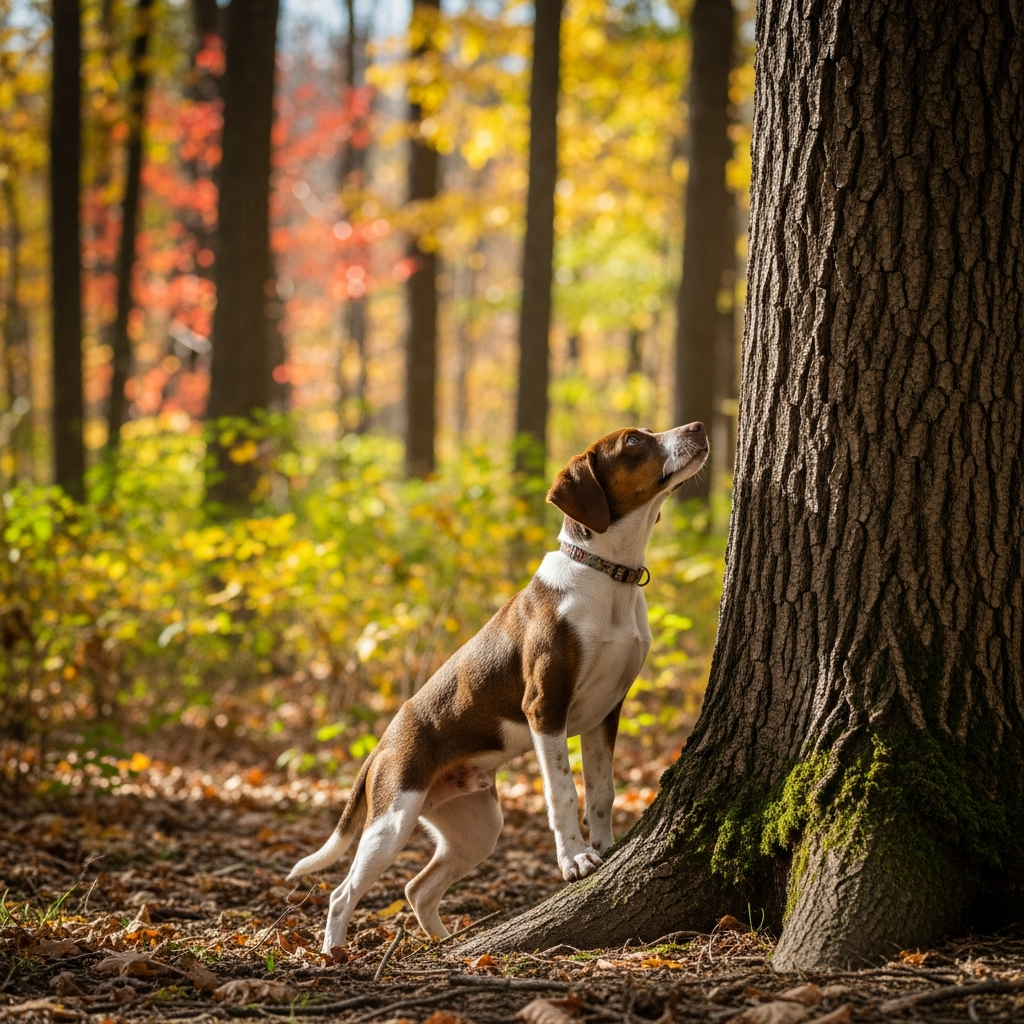
There’s a moment every squirrel dog handler runs into sooner or later.
Your dog strikes, works a short track, and comes treed hard. He sounds convinced, tail wagging and head up. You walk in expecting to see a squirrel stretched out on the limb.
You shine the tree.
Nothing. No movement. No tail flick. No eyes.
And what makes it worse is that the dog never really checked the tree. He hit the base, barked twice, and locked down like the job was done.
If you’re new to squirrel dog training, this is where doubt creeps in. Is he guessing? Is he tree-happy? Did you do something wrong?
Most young squirrel dogs that won’t check trees aren’t stubborn or dishonest. They skip the check because they were never taught how to slow down and verify scent before committing.
Tree accuracy isn’t automatic.
It’s built.
And when a squirrel dog won’t check trees, it’s usually a training gap, not a personality flaw.
What Does “Checking a Tree” Actually Mean?
Checking a tree is the moment between tracking and treeing.
It’s when a squirrel dog:
- Slows down at the base.
- Circles the trunk.
- Uses his nose to confirm scent direction.
- Verifies that the squirrel actually went up.
A dog that checks properly doesn’t just tree where scent ends. He confirms it went vertical.
Young dogs often don’t understand that difference yet. They smell heat. They feel excitement. They commit.
That’s not dishonesty. That’s immaturity.
Signs Your Squirrel Dog Isn’t Checking Trees
You’ll usually see one or more of these:
- He hits the tree and locks down without circling.
- He trees immediately after losing the track.
- He rarely leaves a tree once he commits, even when it’s slick.
- He trees fast but has inconsistent accuracy.
These are signs that excitement is outrunning verification, not dishonesty or lack of ability.
Why Young Squirrel Dogs Skip the Check
There are a few common reasons a squirrel dog won’t check trees.
1. Speed Is Outrunning Understanding
Young dogs love intensity. When scent gets strong, adrenaline kicks in. Instead of slowing down and sorting it out, they slam the first likely tree. They aren’t lying, they’re rushing.
2. Overexcitement at First Success
If a young dog trees early and gets rewarded, praise, petting, or even a squirrel, he may start treeing fast instead of treeing right. Excitement gets reinforced faster than accuracy. Over time, speed becomes a habit.
3. Hunting With Too Much Competition
When hunted with older or faster dogs, young squirrel dogs often tree quickly to avoid getting left behind. They commit early to avoid losing the race. Accuracy suffers.
4. Too Much Handler Pressure
This is the one beginners don’t expect. If a young squirrel dog feels pressure when he’s uncertain, he may start guessing instead of working the track out. Correction before understanding creates hesitation, or worse, panic treeing. This ties directly into why too much correction ruins more squirrel dogs than it fixes, because pressure without understanding creates guessing instead of accuracy.
Should You Correct a Dog That Won’t Check Trees?
Only if he understands what he did wrong.
If your dog truly knows better and is repeatedly skipping the check, correction may be appropriate. But if he’s young and still learning track-to-tree transitions, heavy correction can create bigger problems.
You don’t fix immaturity in a squirrel dog with pressure.
You fix it with repetition and structure.
How Do You Teach a Squirrel Dog to Check Trees Properly?
Tree checking is trained indirectly. You don’t teach it with a command. You build it through opportunity and expectation. Here’s how.
1. Slow the Hunt Down
Hunt the dog alone. Without competition, he doesn’t feel rushed to commit early. Alone hunting builds independence and patience.
2. Don’t Reward Empty Trees
No praise. No excitement. No drama. If there’s no squirrel, quietly lead him off. You’re teaching that guessing doesn’t pay.
3. Let the Dog Work It Out
When he hits a tree, don’t rush in immediately. Give him time to circle. Time to think. Time to re-evaluate. Some dogs will naturally check if you give them space.
4. Build Track Confidence First
Dogs that lack track confidence tend to tree early. The more experience a squirrel dog gets finishing tracks properly, the less he feels the need to guess at the end. Tree accuracy comes from foundation, not pressure.
That foundation starts in early squirrel dog training, not at the tree.
Most squirrel dogs that won’t check trees improve once that foundation is built correctly.
At What Age Should a Squirrel Dog Start Checking Trees?
Most young squirrel dogs begin improving tree accuracy during their first full season, some earlier, some later.
Maturity matters. Experience matters more. You can’t expect polished tree behavior from a dog that hasn’t seen enough squirrels.
Accuracy grows with exposure.
Will a Dog Grow Out of Not Checking Trees?
Sometimes. But not automatically.
Dogs grow out of sloppy habits only when:
- They aren’t rewarded for guessing.
- They’re given time to learn.
- They’re hunted consistently.
Without structure, sloppy treeing can become permanent.
Here are a few common questions beginners ask when their squirrel dog isn’t checking trees properly:
FAQ
Why Is My Squirrel Dog Treeing But No Squirrel Is There?
Usually one of two things: the dog is rushing the track and guessing at the end, or the squirrel moved after the dog committed. Young dogs especially lock onto hot scent and bark before verifying it went up. Give him time to circle and re-check before you walk in to investigate.
How Long Does It Take to Train a Squirrel Dog to Check Trees Properly?
Most dogs start showing real improvement after a full season of consistent, structured hunting. There’s no shortcut. The dogs that develop fastest are hunted alone, not rewarded for empty trees, and never corrected before they understand what went wrong.
Should I Shock a Squirrel Dog for Slick Treeing?
Not unless the dog clearly understands the mistake. Shocking a young dog that is still learning can create confusion and hesitation. Correction only works when the dog knows better and is choosing wrong, not when he’s still developing. Overcorrecting a dog can put the brakes on training. It can ruin a lot of the training you have put into that young squirrel dog.
How Do I Fix a Tree-Happy Squirrel Dog?
Stop rewarding empty trees and start hunting him solo. Tree-happy habits usually build when a young dog is rewarded early for fast treeing or pressured by competition. Remove the incentive to guess, and most dogs will naturally start slowing down and verifying.
The Bigger Picture
If your squirrel dog won’t check trees, don’t panic. Most young dogs struggle with this phase.
The goal isn’t to create a dog that trees fast.
The goal is to create a dog that trees right.
Speed impresses beginners. Accuracy wins seasons.
And if you’re building a squirrel dog from the ground up, start with the full squirrel dog training guide, because tree accuracy is built long before the dog ever locks down on a tree.
I wrote an post on fixing a slick treeing coon dog. the same principals can be applied to squirrel dogs as well.