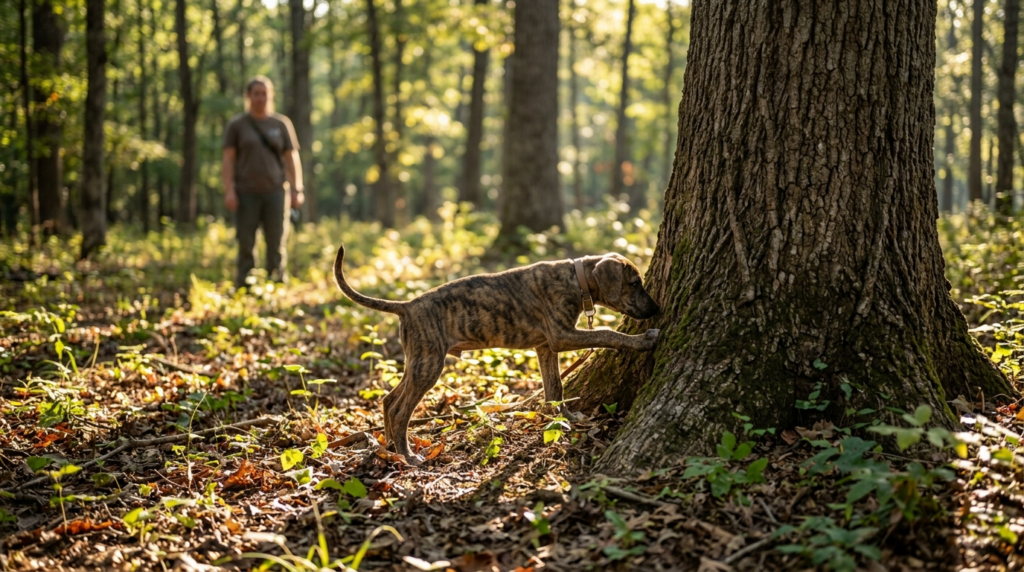
Most handlers push young squirrel dogs too hard before the pup has any reason to trust the process. The pup gets confused, tired, or soured, and the handler walks away thinking the dog does not have what it takes. Nine times out of ten, the dog was fine. The handler just moved too fast.
Starting a squirrel dog pup right is not about making the dog hunt. It is about building the kind of curiosity, confidence, and independence that keeps a dog hunting on its own terms for years. That does not happen in a weekend.
The full framework for building this kind of dog over time is covered in squirrel dog training. But before any of that applies, you have to get the pup started without doing damage.
What Is Actually Happening
When you take a young pup into the woods for the first time, you are not training it to tree squirrels. You are teaching it that the woods are worth being in. That is the whole job early on.
Real early progress looks small. The pup explores cover. It checks a tree. It sniffs along a brush edge and pauses at something that moved. It ranges away from you without asking permission. That is the foundation. Most handlers miss it because they are looking for something louder.
A young pup does not need polished tree style, long hunts, or consistent squirrel contact in the first few months. It needs short, positive trips where it learns to trust its nose, its feet, and its instincts without getting corrected for every mistake or redirected every time it goes the wrong direction.
Slow early development is not the same as low potential. Plenty of handlers have washed out solid dogs because they mistook immaturity for lack of drive. The pup was building. The handler just could not read it.
Why It Happens
Pups get rushed for predictable reasons. Some of it is impatience. Some of it is inexperience. Some of it is peer pressure from other hunters who swear their dog was treeing hard at four months.
The biggest cause is expectation mismatch. The handler wants the pup to hunt like a two-year-old dog on the first few trips. When it does not, the handler starts pushing, repeating commands, and turning every outing into a test.
Too much terrain, too much time in the woods, and too many failed contacts can mentally exhaust a young pup before it learns anything useful. A tired, confused pup is not building drive. It is surviving the trip.
Overusing cage game and artificial setups creates a different problem. The pup learns to expect a staged encounter, not a real hunt. There is a reason cage squirrel without creating bad habits is such a common topic. Artificial excitement can produce flash with no depth behind it.
And sometimes the pup is simply not ready. Age matters, but maturity matters more. Some pups show early and some do not. Pushing an immature dog before it is developmentally ready creates problems that take twice as long to undo.
How to Fix It
Step one is structure at home, not in the woods. Before the pup sees serious squirrel cover, it should come when called, load up without a fight, lead on a leash, and settle down when told. That is not complicated obedience. It is practical control. A good reference for the basics is basic obedience training for puppies. Keep it brief. The goal is a pup that can function in the field, not a pup that can perform in a parking lot.
Once you have that foundation, start with short, easy walks in squirrel-rich cover. Not a full hunt. A walk. Let the pup explore, smell, climb over logs, and work through brush edges. Focus on comfort and curiosity. Do not guide every step.
Keep early trips short. End before the pup gets tired, bored, or overwhelmed. The pup should leave the woods wanting more. If it is dragging by the time you load up, you stayed too long. Short successful trips build more than long exhausting ones.
Hunt where the odds are good. Pick places with visible squirrel activity: fresh cuttings, active feeders, timber edges with hardwood mast. Early exposure works better when the pup actually has something to notice. Avoid dead woods, hard weather, or crowded public spots for first trips.
When the pup shows interest in a squirrel, a tree, or a scent trail, give it room to work. Back off. Let it figure out what it is looking at. The instinct to help or redirect is strong in most handlers, but stepping in too fast teaches the pup to wait for you instead of trusting itself.
Use an older dog carefully, if at all. A steady squirrel dog can show a pup what the game looks like. But running a pup behind a hard-hunting adult can also make the pup mentally dependent. Limited exposure with the right dog can help. Making it a habit can cripple independence.
Reward hunting behavior, not finished tree style. Praise the pup for ranging out, showing interest, and engaging naturally. Early confidence matters more than looking polished. A pup that enjoys the hunt and keeps hunting is further ahead than one that does everything right but is visibly stressed.
Build frequency before intensity. Several short positive trips every week does more than one long hard hunt every few weeks. Consistency helps the pup connect the woods, squirrels, and the satisfaction of a good find.
Devil’s Advocate
Some handlers will say this approach is too soft. They started their dogs hard and those dogs turned out fine. That probably happened. Some dogs can handle pressure early without breaking. The ones that cannot are usually labeled washouts and moved on from, but the real question is how many solid dogs got lost because the handler did not know the difference.
There is a difference between a pup that needs more challenge and a pup that needs more time. Reading that correctly is the skill most new handlers do not have yet. The cautious approach costs you nothing if the pup is ready for more. The aggressive approach can cost you everything if the pup is not.
What Most Handlers Get Wrong
The most common mistake is turning every outing into an evaluation. Every trip, the handler is watching and deciding whether this pup has it or not. That pressure transfers. The pup picks up on it and starts performing instead of hunting.
Staying in the woods too long is the second most common mistake. Tired pups stop learning. They start looking for an exit. A pup that checks out mentally on a long trip is not building anything useful.
Talking too much is the third. Constant commands and redirects keep the pup tied to the handler mentally instead of engaged with the hunt. Some pups never learn to figure things out because they are always waiting to be told what to do next.
Correcting confusion like it is disobedience is where a lot of pups get damaged. A pup that does not understand the game yet should not be treated like a finished dog refusing to work. The timing and fairness of every correction matters.
Comparing the pup to social media dogs or old stories leads to bad decisions. Most polished stories leave out the slow parts. Every dog starts different.
Quick Fix Checklist
Run through this before every early session with a young pup:
Keep the trip under 45 minutes for the first several months
Pick cover with recent squirrel sign before you go
Let the pup range and explore without redirecting every move
Back off when the pup shows interest, let it work
End the trip before the pup loses engagement
Do not correct confusion the same way you correct defiance
Run with an older dog only occasionally and only if that dog hunts steady
Repeat short positive trips throughout the week instead of banking on one long session
When to Leave It Alone
If the pup is overwhelmed, sticking to your side, or shutting down after every trip, the answer is not more exposure. It is less. Back off the frequency, shorten the sessions even further, and give the pup time to decompress.
This connects directly to what how to start a young squirrel dog the right way covers about reading the dog’s state before adding pressure. Not every pause is failure. Some pups show nothing for weeks and then suddenly put it together. Forcing that timeline creates more damage than patience ever will.
A pup with natural ability is easier to ruin by rushing than by waiting. Keep basic structure in place, keep the pup confident, and wait for the right moment to reintroduce woods work. That moment will come. You do not have to manufacture it.
The Bottom Line
The best way to start a squirrel dog pup is with patience, short positive exposure, and enough room for the dog to figure things out on its own terms. Early development should build confidence and desire, not pressure and confusion.
The handlers who end up with the best squirrel dogs are usually not the ones who pushed hardest in the beginning. They are the ones who paid attention, read the dog clearly, and let the process unfold without forcing the outcome.
Do not worry about making the pup look finished. Worry about making it want the woods, trust itself, and come back better every trip. That is the whole job.