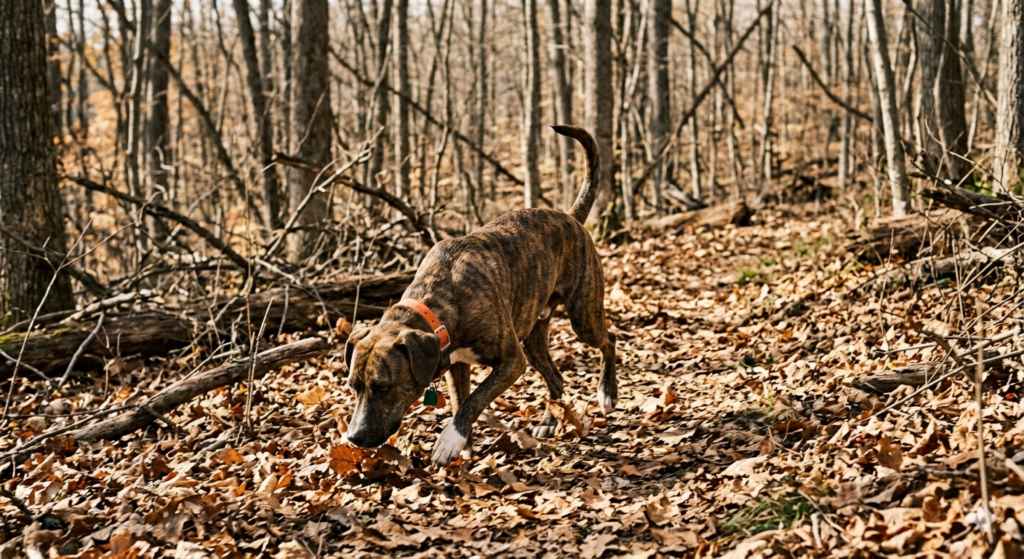
A young squirrel dog that quits a track too early is one of the most common problems handlers run into. The dog picks up scent, shows some interest, works it a little, and then just drifts off. No finish. No tree. Just gone onto something else or back to your heel.
Most handlers read that wrong. They think the dog lacks desire or is lazy or just does not have what it takes. Usually that is not what is happening. Most of the time it is a confidence problem, a pressure problem, or a setup problem. And all three of those are on the handler, not the dog.
You do not fix this by pushing the pup harder. You fix it by understanding how to train a tree dog from the ground up, which means building certainty before asking for grit.
What’s Actually Happening
When a young squirrel dog quits a track, it is usually not stubbornness. It is lost belief. The dog ran into a stretch of the track where the scent picture stopped making sense, and instead of grinding through, it made the easier choice and moved on.
Squirrel tracks get complicated fast. The animal winds through leaf cover, crosses old scent lines, transitions from ground scent to bark scent as it moves up a tree, and cuts through messy timber edges and den trees where the smell pools and scatters. That is a lot to ask a young dog to sort out.
There is also a difference between a pup that never truly had the track and one that had it but lost faith when conditions changed. Both look similar from a distance. Both require different fixes.
Watch for these field signs. The dog starts with excitement, then slows and the head comes up. It starts checking around instead of staying low. It leaves the line and starts hunting for something easier. Eventually it comes back to you instead of working it out. That is a dog that ran into a wall of confusion and chose to quit rather than push through.
This is normal for young dogs. It becomes a real training problem when the handler lets it repeat the same failure over and over without adjusting anything.
Why It Happens
The track is harder than the pup is ready for. Old squirrel scent, dry leaves, frozen ground, high wind, and overhunted timber will humble a finished dog. Running a young dog in those conditions and then wondering why it quits is a handler problem.
The dog has not had enough easy wins. Too many blank hunts, too many situations where the squirrel was long gone before the dog arrived, and not enough clean short tracks with a payoff at the end will drain a young dog’s confidence faster than any bad habit.
Handler pressure is a big one. Over-correcting for leaving a track, talking too much, hollering, or trying to steer every move teaches the dog to watch you instead of working the scent. A nervous dog does not think well. And a dog that is worried about being wrong will quit the second things get uncertain.
Mental immaturity is real. Young dogs have short attention spans. Some pups need more age before they will grind through confusion. That is not a character flaw. That is development. Pushing the clock on a pup that is not mentally ready yet creates more problems than it solves.
Some dogs have learned they can leave the track and bump a fresh squirrel or start a new line and get the same reaction from the handler. If quitting a tough track and finding something easier still earns praise, the dog has no reason to stay with the hard work.
Handler dependency is the quiet one. The dog that looks back for help, quits when you do not walk in, and never learns to solve the last hard part alone is a dog that has been over-managed from the start.
How to Fix It
Go back to tracks the dog can finish. Hunt where squirrels are thick. Focus on short, hot tracks. Avoid rough scenting days while you are rebuilding confidence. Stack success before you ask for difficulty. That is the foundation.
Cut down the confusion. Choose cleaner woods over sections loaded with crossing scent. Start in places where squirrels are actively moving. Avoid overhunted spots where the timber is full of old work. If the dog cannot sort it out in clean conditions, it will not sort it out in messy ones.
Let the pup work without too much help. Stay close enough to observe but do not crowd the dog. Keep your mouth shut more. Let it circle back and puzzle things out. Only move in if your presence genuinely settles and refocuses the pup, not just because you cannot stand watching it struggle.
If the dog starts to drift, ease in quietly and keep it mentally on the problem. Do not scold confusion. Encourage persistence without rewarding frantic guessing. There is a difference between a dog circling to find the track again and a dog that has already decided to leave.
Reward finished work, not flashy starts. Praise when the dog stays with the track and gets to the right tree. Be careful about overpraisinig a dog that opens loud and then quits. That teaches the dog the payoff is in the opening, not the finish.
Hunt short, productive sessions. Young dogs learn better from a few good track problems than from long hunts that leave them mentally wrung out. Quit while the pup still wants more.
Build independence slowly. Avoid putting the young dog with finished dogs every single hunt. Use older dogs only when they genuinely help, not when they do all the work. Make sure the young dog owns some tracks from start to finish on its own.
If the dog leaves one track and starts another, do not immediately praise the new track. Follow it back to where things went wrong if you can and encourage it to return to the original problem. If the dog quits and comes back to you, do not make a big deal of it in either direction. Quietly redirect toward the last known area of the track and let it find its way back in. If it checks the tree area but will not commit, give it time. Some dogs need a few passes before they commit to a bark.
Handling dogs that won’t work out a loss track and dogs that quit too early often overlap. The core fix is the same: better setups, less pressure, more patient observation from the handler.
What Most Handlers Get Wrong
They expect grit before confidence. Grit comes after a dog has won enough times to believe the fight is worth it. You cannot demand it from a pup that has not had enough wins to draw on.
They hunt young dogs in conditions that would test a finished dog. Dry crunchy leaves, high wind, frozen ground, old scent everywhere. Then they blame the dog when it cannot work it out.
They confuse immaturity with a lack of talent. Some of the best squirrel dogs in the field looked rough at a year old. They needed more age, more woods time, and a handler willing to wait.
They talk too much. Constant noise from the handler makes the dog handler-minded instead of track-minded. A dog that is always listening for direction is not fully focused on the scent problem in front of it.
They apply pressure at the exact moment the dog is uncertain. That is the worst timing possible. A dog that gets corrected for confusion learns to avoid situations where it might be wrong, which means it quits earlier next time.
They keep putting the dog in tracks it cannot finish. Every repeated failure teaches the dog that quitting is a valid outcome. You have to change the setup before you can change the behavior.
They rely on a finished dog too much. The young dog watches the older dog clean up every hard track and never learns to solve the last piece alone. When the finished dog is not there, the young one has no frame of reference for working through trouble.
They judge progress by how excited the dog starts rather than whether it finishes. A flashy opener that quits is a dog that has learned half the job. The half that matters is the finish.
Devil’s Advocate
Some dogs just do not want to stay with a track. That is a real thing. Not every dog that quits early is a confidence problem waiting to be solved. Some dogs lack the drive to push through difficulty, and no amount of better setups will fix a dog that is simply not built for the work.
The honest answer is that most handlers never stay patient long enough to find out. They either push too hard too fast and create a handler-dependent mess, or they give up before the dog has had enough time and correct training to develop.
Give the dog the right setups, the right conditions, and enough time. If it still quits on easy hot tracks in clean timber after proper exposure, then you have a talent question, not a training question. But most dogs never get a fair look before the handler has already decided the answer.
Quick Fix Checklist
- Hunt where squirrels are thick and tracks are short and hot
- Choose clean timber over messy crossing-scent country
- Keep your mouth shut and stay out of the dog’s way
- Only step in when your presence genuinely helps refocus the dog
- Reward finished tracks, not just flashy starts
- Keep sessions short and end while the dog still wants more
- Let the young dog own some tracks without the help of a finished dog
- Avoid running in dry, windy, or frozen conditions while rebuilding confidence
- If the dog drifts, quietly ease back to the last known track area before moving on
- Do not correct confusion — redirect it
When to Leave It Alone
Not every quit is a training emergency. A very young dog that loses a tough track once in a while may simply need more age and more time in the woods. Rough scenting days happen. If a pup had a bad morning on crunchy leaves in a high wind, back off. That is not the day to diagnose a character problem.
If the pup is improving overall, do not over-handle every mistake. Steady progress matters more than a perfect outing.
The line worth drawing is repeated quitting on easy hot tracks, obvious dependence on handler help, or quitting becoming a consistent pattern instead of an occasional miss. That is when you adjust setups and training approach in a more deliberate way.
Taking time to build track patience in a young squirrel dog before pushing for difficult work will prevent most of the problems that show up later when conditions get tough.
The Bottom Line
A young squirrel dog that quits a track too early is almost always telling you something about the setups it has been given, not its ability.
Confidence is built through finished tracks. Not through harder pressure, longer hunts, or more time in the woods with a finished dog doing all the hard parts. A pup that learns it can complete the job will stay with the work. A pup that keeps failing the same track in the same conditions just learns that quitting is a normal outcome.
Give the dog tracks it can learn from. Keep your hands off the problem long enough to let it think. Most young squirrel dogs will stay longer and finish better once their head catches up with their nose.