Th
The pup ran a drag all summer and never missed. You put it on the line and it went, opened up, and treed at the end every single time. You figured the hard part was done.
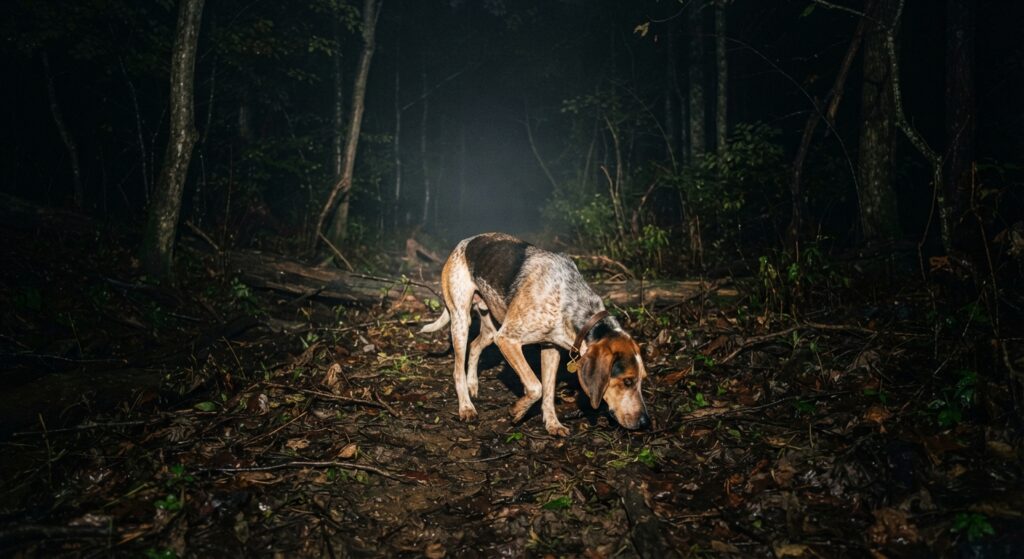
Then season came in. You turned the dog loose on the first cool night with good moisture on the ground, and it put its nose down, worked a little circle, and came back to the light. You walked it deeper. Same thing. It searched, but it never left. Every time you looked down, the dog was within 40 yards of your boots.
That is usually when a handler starts wondering if the dog has any prey drive at all. Most of the time that is the wrong question. A dog that hunts hard the second it hits coon scent has drive. What it does not have yet is the habit of leaving you with nothing in front of it and trusting that something is out there to find.
This is one of the most common problems in a drag-started dog, and it is very fixable if you read it right. If you want the full foundation behind this stage, the coonhound training guide lays out how the pieces fit together. This article stays on one problem: getting a drag dog to cast.
Why a Drag Trained Dog Stalls in the Woods
A drag hands the dog the answer. You lay the line, you put the dog on it, and the scent is heavy and fresh the whole way. It runs a clean path and ends at a tree with something waiting. The dog learned one lesson very well: follow the line you are given.
Casting is a completely different skill. Casting means leaving the handler with nothing to follow, covering empty ground on faith, and hunting until something turns up. The drag never asked the dog to do that. Not once. So when the dog lands in open timber with no line under its nose, it falls back on what has always worked. It stays close and waits for the line to show up.
That is not a lack of desire. It is a dog that has only ever been asked to answer a question, never to go find one.
The overshoot tells the same story
A drag does not make hard turns, go dead at a blacktop road, or double back down a ditch. A real coon does all of that on an ordinary night. When the track went quiet at the road crossing, the dog hit something it had never seen in its life: a loss.
It had no experience working a check. No reason to swing wide, come back, and pick the track up on the other side. So it did the only thing that made sense to it. It quit and came back to the one thing it trusted, which was you. If your dog also has a habit of driving past turns on hot tracks, why some coonhounds blow through tracks goes deeper on that piece.
Age and new country are part of it
A dog under a year old in its first real woods is taking in a lot at once. Full dark, new ground, hogs crashing off through the palmettos or the cane, deer blowing from the edge of a field. Some young dogs bull right through all of it. Softer, more careful dogs stay near the light until the woods stop feeling so big.
That is a stage, not a verdict. It is worth testing, too. Let someone else handle the dog for a night. If it acts the same, you have ruled out the most common cause of a close-working dog, which is a handler who talks, whistles, and walks with the dog. What you are left with is a dog that needs experience, not pressure.
Teaching the Dog to Go Find a Track
The fix is not one big hunt or one special trick. It is a setup that keeps rewarding the dog for leaving you, night after night, until going out becomes the habit instead of the exception.
Hunt where the coons are thick. This matters more than anything else on the list. Creek bottoms, river and lake edges, crop fields that back up to timber, and ditch lines near water. Look for fresh tracks in the mud before you ever turn loose. The goal is for the dog to strike within the first five or ten minutes, close to the drop. Every early strike teaches the dog that going out produces something. Dead woods teach it the opposite.
Pick your nights. A cool, damp night with a light breeze holds scent and gives a young dog its best shot. A dry, windy night after a cold front is a poor time to judge anything. If the ground is crunchy and the wind is swirling, either hunt your best spot or stay home.
Drop the dog and go quiet. Turn it loose, then stand still or sit down on a log. Light off or turned low. No talking, no whistling, no walking along behind it. A young dog that can hear and see the handler moving will hunt around the handler. Give it 20 to 30 minutes before you decide anything about the night. If it comes back in five, let it stand there and figure out that nothing is happening at your feet.
Short nights, more often. An hour two or three nights a week does far more than one long night every other weekend. Repetition is what builds a cast. One big hunt is mostly a lot of walking and a tired dog.
Turn the drag into a search. The drag is not useless now. Change how you use it. Lay the line where the dog cannot see it start, then turn the dog loose 50 to 100 yards off and let it find the line on its own. Add a gap where you lift the drag for 20 yards. Add a hard turn. Run it across a dirt road. Now the dog has to search for a line and work a loss to finish it, which are the exact two skills it is missing in the woods.
Use real tracks when you get them. When you see a coon cross a road or a field edge, give it a few minutes, then walk the dog to where the coon went in and turn loose. That is a known, hot line on real ground with real turns. Do not help after that. Let the dog sort out the check if it hits one.
Make the tree worth it. When the dog does get one up, take your time walking in, then make a big deal over the dog at the tree. Shine the coon. Let the dog stay and bawl. That is the payoff for leaving you, and it is what makes the next cast a little longer.
About the older dog. An honest older dog can show a young one what casting looks like, and a handful of hunts together can help a lot. Jed Finley at SportDOG lays out this same pattern in his approach to starting a young hound: learn from the older dog, then hunt the young one by itself so it has to solve problems on its own. Keep it to a handful of hunts. A young dog that hunts with company too long starts leaning on the older dog’s strike and track work. If you cannot find an older dog, solo work in good country will still get you there. It just takes a little longer.
Where Handlers Make It Worse
Most stalled dogs at this stage are not ruined by what they are. They get set back by what the handler does in the first month of the season.
Walking the dog through the woods. It feels like you are helping by leading the dog deeper. You are teaching it that the hunt moves wherever you move. The dog keeps tabs on you because that is where the action has always been.
Recasting too early. The dog comes back, so you pick it up, drive to another spot, and turn loose again. Three spots in an hour feels productive. To the dog, every drop ends with the handler fixing things, so there is no reason to push.
Hunting dead country. A handler with limited spots keeps going back to the same worn-out woods because it is close and easy. A young dog that gets skunked night after night learns that going out is a waste of time.
Correcting the dog for coming back. Some handlers get frustrated and send the dog off with a sharp word or a tap on the collar. A soft dog that is already unsure reads that as pressure at the exact moment it needs confidence. Now it hunts close and nervous.
Judging on bad nights. A dog that looks lost on a dry, windy night after a front is not showing you who it is. Neither is one great night on a hot track. Judge over weeks, not hunts. For more on reading this stage without jumping to conclusions, see young hound lacks drive or just learning to hunt alone.
Calling it too early, or too late. Nine months is early to give up on a dog that stays honest on off-game and hunts hard when it hits scent. That said, some dogs really are too soft or short on drive, and no setup in the world will change that. Breeding builds the engine. Training only teaches the dog to drive it. If the dog gets a full season of steady nights in good coon country and by 18 months it still will not leave the handler, does not care when it strikes, and quits easy tracks, that is real information. The fair test is a season of the right setup, not a handful of nights in the wrong one.
Do this: Turn loose where you have seen fresh coon tracks.
Don’t do this: Keep hunting the same dead woods because they are close.
Do this: Drop the dog, then stand still and stay quiet.
Don’t do this: Walk along with the dog hoping it moves out ahead of you.
Do this: Hunt an hour two or three nights a week.
Don’t do this: Save it all for one long weekend hunt.
Do this: Run drags that start out of sight and include a gap or a turn.
Don’t do this: Keep running the same short, straight drag the dog already knows.
Do this: Put the dog in on a coon you saw cross, then leave it alone.
Don’t do this: Walk the dog down the track and point at the ground.
Do this: Make a big deal over the dog at the tree.
Don’t do this: Correct the dog for coming back to you.
Do this: Use an older dog for a handful of hunts, then go back to solo.
Don’t do this: Run the young dog with company all season.
Try This on Your Next Hunt
- Scout for fresh tracks in the mud before you turn loose.
- Pick a cool, damp night if you have the choice.
- Turn loose, cut your light down, and sit still for at least 20 minutes.
- If the dog comes back, say nothing and let it stand there.
- Lay one drag this week that starts out of sight and crosses a road.
- When you see a coon cross, give it a few minutes and put the dog in.
- When the dog trees, take your time walking in and praise it at the tree.
- Keep a short note of each hunt: conditions, how far the dog went, and whether it struck.
The Dog Will Show You
A drag dog that will not cast is usually a dog that has never been asked to find anything on its own. That is a gap in experience, not a hole in the dog.
A nine-month-old that stays honest on hogs and deer and hunts hard the minute it hits coon scent already has the parts you want. What it is missing is time in the woods learning that going out pays. That comes from good country, a quiet handler, and enough nights that the timber starts to feel like home instead of a big dark place to stay out of.
Give the dog the setup, give it the season, and it will show you what it is.