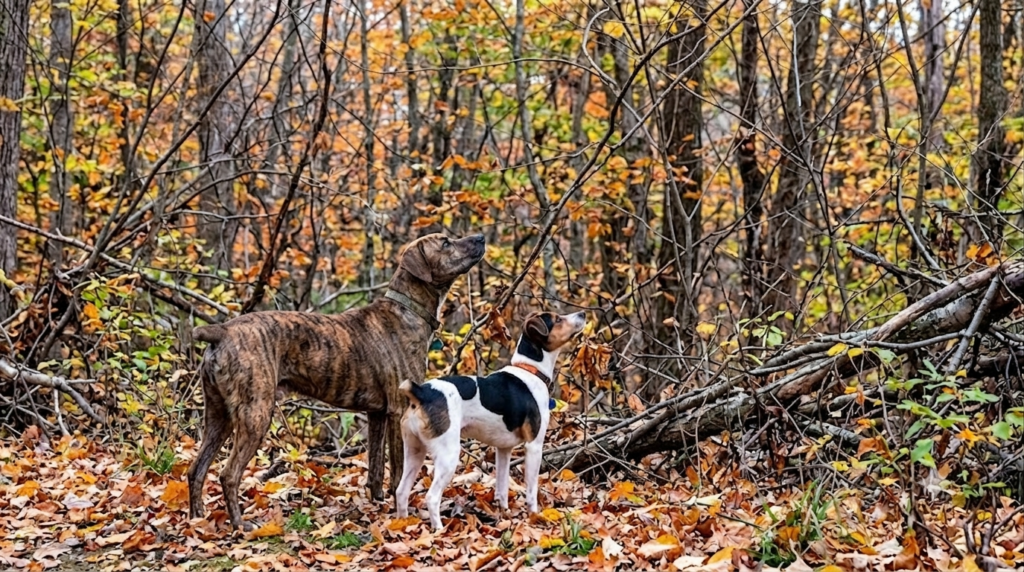
If you are new to squirrel dog hunting and trying to pick your first dog, you have probably already heard two names over and over: mountain cur and feist. They are the two breeds most associated with treeing squirrels, and for good reason. Both have generations of proven hunting instinct behind them.
But “which one is better” is the wrong question. The right question is which one fits your woods, your family, and the kind of hunting you actually plan to do. This guide breaks down the real differences between a mountain cur and a feist so you can make that choice with a clear head, not just a gut feeling.
What Cur and Feist Actually Mean
Cur is not an insult, and it is not a catch-all for mixed breed dogs, even though the word gets used that way sometimes. The mountain cur is a distinct American breed developed by early settlers who needed a dog that could hunt, guard property, and work livestock. It has been refined for generations specifically for treeing ability.
The United Kennel Club breed standard for the Mountain Cur lays out the breed’s working history and physical traits in detail, and it is worth a look if you want the full picture before you commit to one.
Feist is an older word, and it refers to a family of small terrier-based hunting dogs with roots going back centuries in the southern mountains. There are several regional strains, including mountain feist and treeing feist, but for a beginner the important thing is the general type: small, quick, and bred specifically to work close and tree small game.
Size and Range: The Practical Difference
This is the difference that matters most day to day. A mountain cur typically runs 30 to 50 pounds and covers ground. It will range out ahead of you, sometimes several hundred yards, hunting with its nose and eyes as it goes. A feist is usually under 30 pounds and works closer, often staying within a hundred yards or so of the handler.
If you hunt big timber tracts or mountainous ground, a cur’s wider range is an advantage. It covers more country and finds more squirrels per hour. If you hunt small woodlots, a property with roads on multiple sides, or land where you do not want a dog wandering onto a neighbor’s fence line, a feist’s closer working style is the safer and more practical choice.
Range also changes how a hunt actually feels on foot. Following a wide ranging cur usually means covering serious ground yourself, moving from ridge to ridge and staying ready to walk toward a distant bark. Following a feist is a slower, tighter loop, which some new handlers prefer simply because it is easier to keep the dog in sight instead of relying on sound alone to know where it has gone.
Hunting Style: Nose Versus Eyes
Curs generally hunt with a strong combination of nose, ears, and eyes. They can pick up a cold track on the ground and work it out, which makes them effective in a wider range of conditions, including damp mornings or slower squirrel activity.
Feists tend to lean more on sight and sound. They are quick to spot movement and quick to react to it, which makes for fast, exciting hunts when squirrels are active and moving. On a still, quiet day with little squirrel movement, a feist can have a harder time than a cur with a strong nose.
Temperament and Family Fit
Both breeds can make excellent family dogs, and both are generally good with kids when raised around them. There are real differences in day to day personality, though. Mountain curs tend to be loyal, watchful, and a little more reserved with strangers. They want to please their handler but are not always looking to be everyone’s best friend.
Feists carry more of that classic terrier energy: busy, alert, and often a little bit vocal even outside the woods. They bond hard with their people and usually do well as a house dog, but that same energy means they need daily outlets. A bored feist will find its own entertainment, and you may not like what it chooses.
Neither breed does well left alone in a kennel with no interaction. Both were bred to work closely with a person, and both will settle better into family life if they get regular attention outside of hunting season, not just during the months when squirrels are legal game. A dog that only sees its handler a few times a year will not bond the way either breed is capable of.
Which Fits Your Situation
If you are hunting a few acres near a subdivision, raising your first dog with young kids underfoot, or you simply want a dog that stays in sight most of the time, the feist is usually the better starting point. It gives you a manageable range while you both learn.
If you have access to larger tracts, rougher terrain, or you want a dog that can grind through a tough morning and still find game late in the day, the mountain cur’s size and stamina give it an edge. Just be honest with yourself about the ground you actually hunt, not the ground you wish you hunted.
Either way, once you own a dog that ranges out of sight even occasionally, a GPS tracking collar earns its keep fast. Garmin and Dogtra both make systems built for this kind of hunting, and knowing exactly where your dog treed saves you a lot of wandering around a dark hollow guessing which direction the bark came from.
What Neither Breed Will Do For You
Here is the honest part. Neither a mountain cur nor a feist arrives ready to hunt. Both are bred with strong natural instinct, but instinct still has to be shaped by time in the woods, exposure to game, and a handler who is paying attention. A well-bred pup from either breed can still turn out disappointing if it never gets consistent field time.
Before you bring a pup home, it helps to understand what your squirrel dog already knows before you start training, because a lot of what looks like training is really just giving the dog room to use instinct it was already born with.
It also helps to go in with realistic expectations about the process itself. The squirrel dog will show you what it is over time, and that is true whether you start with a cur or a feist. Your job is to put in the woods time and stay observant, not to force a result on a schedule.
The Takeaway
A mountain cur and a feist can both make outstanding squirrel dogs. The right one for you comes down to the size of the ground you hunt, how far you want a dog to range, and the kind of household you are bringing it into. Neither breed is a shortcut. Both need real time in the field to become what they are capable of being.
Once you have picked a breed and brought a pup home, the real work begins. Start with the fundamentals in our guide on [how to train a tree dog], then build from there based on what your dog shows you in the woods. That is where the patience you put in during the first season starts paying off in the woods.