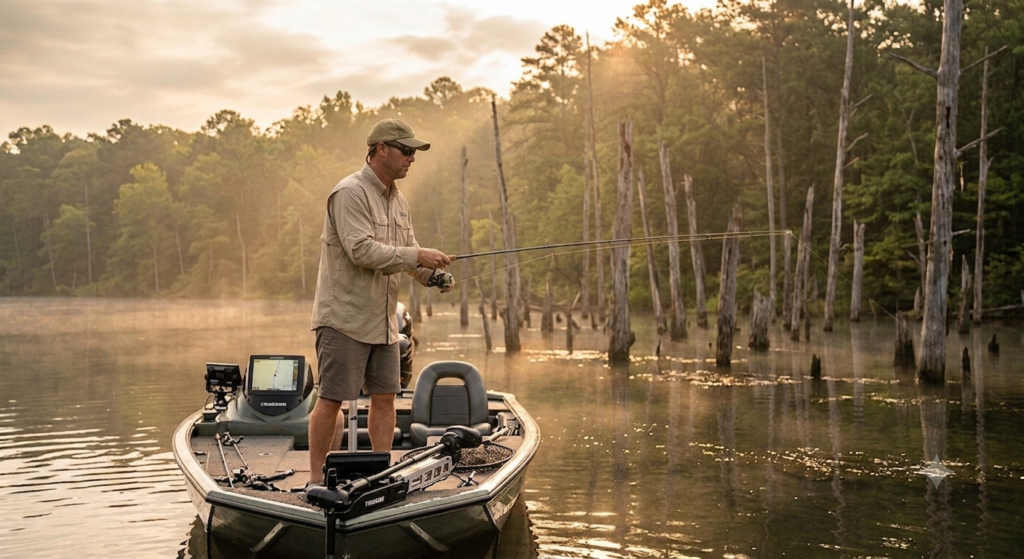
If you’ve read a summer crappie fishing guide lately, there’s a good chance it started with turning on your side-scan and went from there for anyone fishing out of a fourteen-foot jon boat or off the bank. Summer crappie have a reputation for being deep, scattered, and nearly impossible to find without a screen full of blue and orange dots. That reputation is only half true. Crappie do move and settle into a tighter band of water once the heat sets in, but you don’t need electronics to find that band. You need to understand why they’re there and read the water the same way anglers did for decades before sonar existed.
This is for the angler fishing from the bank, a canoe, or a boat without a fish finder, who is tired of summer advice that assumes you’re staring at a screen instead of the water. It pairs well with the rest of our crappie fishing guides if you want the full range of seasonal tactics beyond just summer.
What’s Really Going On
By the time summer settles in, most lakes and reservoirs have stratified into layers. Warm water sits on top, cold water sits at the bottom, and the thermocline separates the two.
According to the Iowa Department of Natural Resources, below the thermocline, oxygen levels drop off enough that most fish can’t survive there for long, which is why understanding where that layer sits is one of the most reliable ways to predict where summer fish will hold.
What that means for crappie is simple. They get squeezed into a band of water between the surface heat they want to avoid and the oxygen-starved depths they can’t survive in. You don’t need a graph to know that band exists, just an understanding that it does. On most lakes and reservoirs, it sits somewhere in the 8 to 20 foot range, shallower on smaller or clearer water, deeper on big clear reservoirs. Once you accept that crappie are living in a fairly narrow slice of the water column, the job becomes less about scanning miles of lake and more about finding the specific pieces of cover that sit inside that slice.
I’ve fished lakes I’d never set foot on before with nothing but a paper map and a countdown method, and caught fish while boats with three-thousand-dollar units idled right past me. Electronics make the search faster. They don’t make the fish smarter or the pattern any different.
How to Approach It Step by Step
Start with a map, not a screen. A basic lake map, either a paper one or the free satellite view on your phone, will show you creek channels, points, and old roadbeds even on lakes you’ve never fished. Crappie relate to structure and cover, and in summer they want that structure to intersect with the depth range where the water is comfortable. Look for channel bends near the old creek bed, main lake points that drop off quickly, bridge pilings, and standing timber.
These are the same kinds of spots covered in our guide on how to build, place, and fish brush piles for crappie, and if you built or found brush piles earlier in the year, summer is when they really start paying off.
Once you’re on the water, use a simple countdown method to find depth without electronics. A 1/16 ounce jig falls at roughly one foot per second on a slack line. Cast out, let the bait sink while counting, and note how many seconds pass before you feel bottom or get bit. That count becomes your depth gauge. Work a piece of cover from shallow to deep, counting a little further with each cast, until you start getting bit consistently. Once you find that depth on one piece of structure, you have a starting point for every other piece of structure on that lake, because crappie tend to hold at a similar depth across the whole body of water once they’ve settled into a summer pattern.
Pay attention to water clarity and temperature too. A cheap stick thermometer tells you more than people give it credit for. If the surface is reading well into the 80s, the fish are almost certainly holding deeper and tighter to cover than they were in spring. Clearer water pushes fish deeper and tighter to shade. Stained or off-colored water lets them sit a little shallower and looser.
Best Tactics, Baits, and Setup
A slip bobber is one of the most underrated tools for fishing summer crappie without electronics, because it lets you set an exact depth and hold it there. Set the bobber stop to whatever depth your countdown method found productive, thread on a small minnow or a jig, and work it slowly along the edge of a brush pile, bridge piling, or timber line. The bait stays at the right depth the entire time instead of falling through the strike zone the way a straight cast and retrieve does.
If you’d rather cast and retrieve, stick with light jig heads in the 1/16 to 1/32 ounce range so you can count them down accurately. Lean on natural colors in clear water and brighter colors like chartreuse or white in stained water. Minnows under a cork remain one of the most consistent producers for summer crappie anywhere, especially when the bite is finicky. Docks and bridges are your best friend if you’re fishing without a boat at all, since they’re visible cover that doesn’t require a map to find, and they hold shade that crappie use to escape the heat all day long.
If you do have a boat and want to add electronics-based methods on top of this approach later, our guide to catching summertime crappie covers side-scan, trolling, and dock shooting for when you’re ready to layer that in.
Common Mistakes
The biggest mistake anglers make when they don’t have electronics is fishing too shallow for too long simply because it’s easier to reach. Summer crappie are rarely sitting right up against the bank in the middle of the day, even around docks, so don’t be afraid to work the deeper edges and the ends of the dock closest to open water. The second mistake is giving up on a good-looking piece of cover after just a few casts. Without a screen to confirm fish are there, it’s tempting to move on too fast. Give a piece of structure a real chance by working several depths and both sides of it before leaving. The last mistake is guessing at depth instead of counting it down, which means you’re never quite sure if you fished through the strike zone or just over it.
Adjustments for Changing Conditions
On bright, calm days, fish tighter to cover and slightly deeper, since crappie pull back into shade and thicker structure when the sun is high. Overcast days and light wind can pull fish a little shallower and more willing to chase, so it’s worth working the same structure a few feet shallower than you did the day before. After a heavy rain, expect fish to slide toward the mouths of creeks where cooler, oxygenated water is flowing in, even in the middle of summer. Early morning and evening remain the most consistent windows no matter what the sky is doing, simply because the water near the surface cools down enough to draw fish up and make them more willing to bite.
FAQ
How deep are crappie in summer without a fish finder?
Most lakes hold summer crappie somewhere between 8 and 20 feet, with the exact depth depending on water clarity and the size of the lake. Use the jig countdown method on a known piece of structure to pin down the depth on your specific lake, then apply that same depth to other cover nearby.
Can you catch crappie from the bank in summer?
Yes. Docks, bridges, and any bank area with a steep drop into deeper water are your best bets. Focus on structure that gives you access to deeper water without needing a boat, and fish the shaded side whenever possible.
What is the best bait for summer crappie without electronics?
A minnow under a slip bobber set to the right depth is one of the most reliable options, since it holds the bait in the strike zone without guesswork. Small jigs in the 1/16 to 1/32 ounce range work well too, especially when you can count them down accurately.
Do crappie bite in the middle of the day in summer?
They can, but they’re usually holding deeper and tighter to cover, and the bite tends to be slower. Early morning and evening are more consistent, but midday fish can still be caught by working the deeper, shaded edges of structure.
How do I find crappie structure without a map or sonar?
Start with the free satellite view on your phone to spot creek channels, points, and old roadbeds. On the water, look for visible cover like docks, bridges, and standing timber, and use the jig countdown method to confirm depth once you’re fishing it.
Conclusion
Summer crappie fishing without electronics comes down to understanding why the fish are holding where they are and being methodical about finding them. Learn the general depth range for your lake, use a simple countdown method to dial it in, and focus your time on real structure instead of open water. It takes a little more patience than watching a screen, but the fish are there, and now you know how to find them without one.