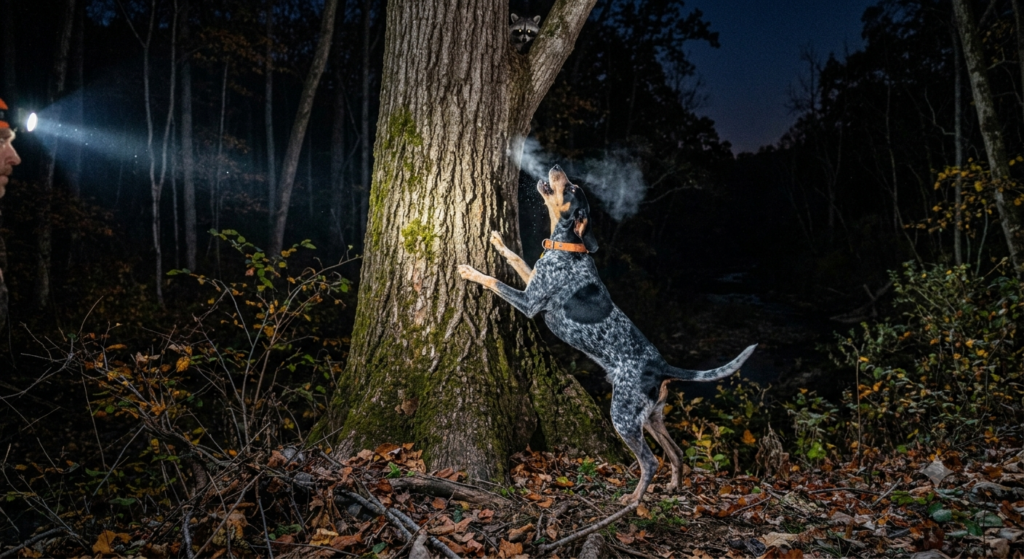
You’re standing at a breeder’s kennel, and there are six different coonhound breeds represented in the pens around you. A Bluetick pup is chewing on your bootlace. Two runs over, a Redbone is watching you with the kind of calm, steady eyes breeders always brag about. Somebody’s Plott has been barking at a squirrel that crossed the yard an hour ago and hasn’t let it go since.
You came here to buy your first hunting dog. Instead you’re standing in the middle of an argument that’s been going on in coon hunting circles for a hundred years, and everybody in it thinks their breed is the only right answer.
Here’s the truth nobody at that kennel is going to tell you: for a first-time handler, breed matters less than most people make it sound, but it isn’t nothing either. The differences between these six breeds are real, and they shape how your first year in the woods actually feels. Get the fit wrong and you’ll spend that year fighting a dog that doesn’t suit how you hunt. Get it right and the learning curve gets a lot shorter.
This isn’t a pedigree breakdown. It’s what each breed is actually like to own and hunt as a beginner, based on what handlers who’ve run all six say when they’re being straight with you. If you want the full picture on how a coonhound develops once you get it home, our coonhound training pillar covers everything from first nights to a finished dog.
What Actually Determines the Right Fit
Before you start attaching yourself to a breed name, sort out what you’re actually solving for. Four things matter more than coat color or bloodline reputation.
How the dog ranges. Some coonhounds hunt tight and check in often. Others go wide and trust you to find them. A beginner running a wide-ranging dog needs a GPS collar and the patience to let the dog work out of sight for long stretches. Garmin and Dogtra both make systems reliable enough to depend on for that.
Voice and mouth. A dog with a loud, frequent mouth is easy to follow through thick timber. A quieter, more selective dog demands sharper ears and more patience on your part.
Cold-nose ability versus speed. Some breeds are built to work a track that’s hours old and moving slow through difficult scent conditions. Others are built for speed on a fresh, hot track. Neither is better. They suit different hunting styles and different terrain.
Temperament at home. A started or finished dog still lives in your yard, your truck, maybe your house. Energy level and how easily the dog takes correction matter as much at home as they do in the woods.
Understanding your own hunting style before you understand the breeds is what separates a good match from a frustrating one. If you haven’t been out yet, your first night in the woods will tell you more about what you actually want in a dog than any breed description will.
Whatever breed you choose, the early foundation matters more than the name on the papers. The same basic principles of confidence, woods exposure, independence, and timing are covered in our guide to how to train a tree dog.
The Six Coonhound Breeds, One at a Time
Bluetick Coonhound. Blueticks are cold-nosed, methodical workers. They don’t rush a track, and they don’t quit one that’s gone faint and difficult. For a beginner, that steadiness is an asset. The dog isn’t blowing past sign in a hurry, which gives you time to learn what you’re actually looking at. Blueticks tend to run calmer at home than some of the faster breeds, which matters if this is your first hunting dog living in your yard.
Redbone Coonhound. Redbones are about as close to an all-purpose choice as this list gets. Versatile, biddable, steady under correction, and comfortable in a range of terrain from swamp bottoms to mountain hardwoods. A Redbone won’t specialize the way a Bluetick or a Plott does, but for a beginner who isn’t sure yet what kind of hunting they’ll end up doing most, that lack of specialization is a strength.
Treeing Walker Coonhound. Walkers are the most numerous coonhound breed for a reason. They’re fast, hot-nosed, and wide-ranging, which makes them exciting to hunt behind but demanding to handle. A young Walker will test a beginner’s patience with range and speed before it settles into consistency. This breed rewards a handler who’s committed to a good GPS collar and doesn’t mind chasing a beeping handheld through the dark for a season or two.
English Coonhound. Bred heavily for competition speed and drive, English Coonhounds bring serious energy and a hard-charging style to a track. That drive is an asset in the right hands, but it can overwhelm a true first-time handler who hasn’t developed the timing to manage a high-energy dog yet. This breed suits someone coming into coon hunting with prior dog-handling experience, even if coonhounds specifically are new.
Black and Tan Coonhound. Black and Tans are deliberate, deep-voiced, and methodical, with a scenting ability that holds up in tough conditions. Their disposition at home tends to run calmer and more even than the faster breeds, which makes them forgiving for a beginner still learning to read a dog’s body language and voice changes.
Plott Hound. The Plott is the outlier on this list, the only one of the six that doesn’t trace back to Foxhound stock. Originally bred for big game, Plotts bring serious grit, independence, and tenacity to a track. That independence is exactly what makes them harder for a total beginner. A Plott that decides it knows better than you will act on that, and a handler without experience reading and correcting a strong-willed dog can end up in a standoff. UKC’s official breed standards lay out the full history and traits for all six breeds if you want the complete picture beyond what matters for a first season.
What Most Beginners Get Wrong
The biggest mistake is picking a breed based on looks or coat pattern. Nobody in the woods cares what color your dog is, and neither does the raccoon.
The second mistake is picking a breed because it won at a competition you watched or read about. Competition dogs are bred and conditioned for a specific kind of performance under specific rules. That has very little to do with what makes a good, honest hunting companion for a beginner learning the sport from scratch.
The third mistake, and the one that costs people the most, is ignoring temperament at home. A high-drive, wide-ranging dog that’s thrilling to hunt behind can be exhausting to live with if you don’t have the time or setup to manage that energy between hunts. What actually matters when buying a coonhound goes deeper into evaluating an individual dog once you’ve settled on the kind of breed temperament you can actually handle.
Do This / Don’t Do This
Do This
- Match the breed’s range and speed to how much woods time and patience you actually have, not how much you wish you had.
- Spend a night in the field with each breed you’re considering before you commit. Watching a dog work tells you more than any description.
- Ask what the parents are like at home, not just in the woods. Temperament is heritable.
- Buy a started or finished dog in a breed known for a calmer disposition if this is genuinely your first hunting dog.
Don’t Do This
- Don’t choose a breed because it’s the one everyone in your area runs. Popularity in a region reflects tradition, not fit for you.
- Don’t assume a slower, cold-nosed breed is a beginner shortcut. Cold-nosed work still requires patience and the ability to read a track that isn’t obvious.
- Don’t buy a Plott or an English Coonhound as your first dog without experience handling a strong-willed, high-drive animal.
- Don’t skip meeting the individual dog because you’ve already decided on the breed. The breed sets a tendency. The individual dog is what you’re actually hunting behind.
Devil’s Advocate: Breed Matters Less Than You Think
Every argument in this article has been about breed differences. Here’s the other side of it: an individual dog with honest breeding and the right temperament will outperform a “correct” breed choice with a mediocre dog, every time.
A well-bred Plott from a line selected for biddability will be easier to handle than a poorly bred, nervy Redbone from a kennel that doesn’t care about temperament. The breed gives you a tendency, not a guarantee. Spend more time evaluating the individual dog and its parents than you spend agonizing over which of the six breeds to pick. The breed decision narrows your search. It doesn’t make it for you.
Quick Fix Checklist
Before you commit to a breed, run through this:
- Write down how many nights a week you can realistically hunt, and how much daily exercise and attention you can give a dog between hunts.
- Watch each breed you’re considering work a track in person if you can, even once.
- Ask breeders about the parents’ temperament at home, not just their hunting resume.
- Rule out English Coonhounds and Plotts as a first dog unless you already have experience handling high-drive animals.
- Choose the individual dog’s breeding and temperament over the breed name on the papers.
The six coonhound breeds all tree coons. That much has never been in question. What separates a good first season from a frustrating one isn’t which breed you picked off a list. It’s whether the dog in front of you matches the handler you actually are right now, not the handler you picture yourself becoming.
Pick the breed that fits your patience and your woods time. Then pick the individual dog that fits everything else. Do it in that order and your first coonhound will teach you the sport instead of testing you out of it.
Starting a young coonhound? Get the free “First 30 Nights” guide before you make mistakes you can’t undo.