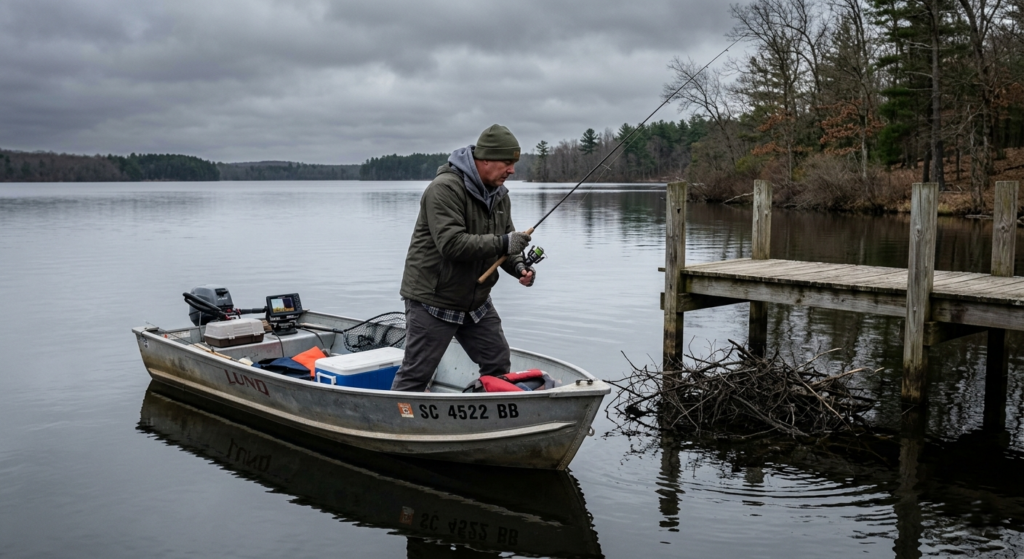
Yesterday they were stacked up and biting. You left the lake happy, maybe even a little smug. Today you’re back on the water and nothing is happening. Your jig drifts through the same water column, over the same brush pile, at the same depth, and you get absolutely nothing.
A cold front rolled through last night. And now you’re wondering if the fish just disappeared.
They didn’t. But something real changed, and if you keep fishing the same way you were fishing before the front, you’re going to have a long, quiet day on the water. The good news is that crappie not biting after a cold front in spring is one of the most fixable problems in fishing. You don’t need a different lake. You need a reset strategy.
This guide breaks down exactly what a spring cold front does to crappie behavior, where the fish actually go, why your current approach stopped working, and how to adjust and start catching them again.
Quick Answer: How to Catch Crappie After a Cold Front Cold fronts don’t chase crappie off the lake — they just change where the fish hold and how willing they are to chase a bait. The fix is almost always a combination of going slightly deeper, slowing way down, fishing tighter to cover, and downsizing your presentation. Most anglers lose fish after a cold front because they keep doing exactly what worked the day before. |
Why Crappie Stop Biting After a Spring Cold Front
Before you can fix the problem, you need to understand what actually happened. A lot of anglers blame cold fronts for ruining a day of fishing without fully knowing why. Here’s what’s going on beneath the surface.
Water Temperature Drop and Metabolism Shift
Crappie are cold-blooded, which means their body temperature and metabolism are controlled by the water around them. When a cold front drops the surface temperature, even by just a few degrees, it slows them down. Their body tells them to conserve energy.
In spring, this matters more than any other season. Crappie are either moving toward their spawning areas, actively spawning, or recovering from it. Their metabolism is already working overtime. A sudden temperature drop feels like hitting the brakes. They don’t have to feed aggressively, so they don’t.
Barometric Pressure Spike Makes Fish Inactive
Cold fronts bring a sharp rise in barometric pressure as the front passes. Fish feel this change, and most species, including crappie, tend to become less active when pressure is high and stable. They aren’t necessarily gone from their spot, but they’re not in a chasing mood.
Think of it as the difference between a crappie that will swim three feet to eat something and one that will only bite if you drop it directly in front of their nose. Post-front fish tend to be the second type.
Fish Reposition: From Aggressive to Tight-Holding
Pre-front crappie are often roaming and feeding actively. They’ll move to find bait, suspend in open water, and hit presentations that are moving at a pretty good clip. After the front, most of that aggressive behavior stops.
Instead of moving around, post-front crappie tend to get tight to something. A dock post. A brush pile. A laydown log. A rock ledge. They pull in close to structure and just sit there, conserving energy and waiting for conditions to settle. Getting your bait to them requires precision, not speed.
Why the Same Spot Suddenly Feels Dead
This is the part that trips people up. You hit a spot yesterday and it was on fire. Today it feels like nobody’s home. But in most cases, the fish haven’t gone far. They’ve repositioned, either dropping down a few feet in the water column or pulling in tighter to the structure that was already holding them.
Your bait isn’t reaching them because you’re fishing the same depth and moving too fast. Two feet lower and half the speed might be all it takes to find them again.
Where Do Crappie Go After a Cold Front?
Understanding where they move is half the battle. Here’s what typically happens, though keep in mind that every lake is different and conditions will vary.
The Most Common Move: Going Slightly Deeper
After a cold front, crappie almost always drop down in the water column. If you were catching fish at 4 feet before the front, look for them at 6 to 10 feet now. The exact shift depends on the lake, the structure, and how severe the front was.
This doesn’t mean they’ve gone to the deep main lake basin. They usually just slide down a little from wherever they were. If there’s a drop-off near a flat where they were feeding, they’ll often sit on the break or just below it.
From Roaming to Cover-Holding
Pre-front crappie roam. Post-front crappie don’t. After a front, fish that were cruising a flat will usually move back to the nearest piece of hard structure. Brush piles, dock posts, laydowns, stumps, and bridge pilings all hold fish after cold fronts because they give the fish something to tuck against.
If you’ve been fishing open water or loose staging areas, you’ll need to tighten up and target actual structure after a front. The fish are still there, just no longer willing to wander.
For a deeper look at fishing those spots, this guide on
For a deeper look on targeting tight structure, this guide on how to fish brush piles for crappie walks through exactly how to position and work different types of cover.
Spawn Staging Rollback
If you’re in the middle of the pre-spawn or spawn window and a cold front hits, staging fish will often temporarily pull back off the banks. Fish that were in 2 to 4 feet of water near spawning areas may slide back to 8 to 12 feet until temperatures and pressure stabilize.
This can make the shallows feel completely empty when they were loaded up just the day before. Give it a day or two after the front passes, and they’ll start moving back in.
If you want to understand more about how fish position during this time of year, this breakdown of
If you want to understand more about how fish position during this time of year, this breakdown of where crappie go during the spawn is worth a read.
Bank Anglers vs. Boat Anglers After a Front
Bank anglers often have a harder time after a cold front simply because the fish have repositioned to depth. If you’re on foot, your best bet is to focus on access points to deeper water: channel swings, bridge pilings, dock edges, and steep shoreline drops where deeper water is within reach.
Boat anglers have more options but need to be disciplined about adjusting depth rather than moving to a completely new area. The fish probably didn’t travel far. They just went deeper or tighter. Work your way down through the water column before you move on.
How Long Does It Take Crappie to Start Biting Again After a Cold Front?
This is one of the most common questions and there’s no exact answer, but here’s a realistic range.
A mild front in mid-spring might only shut the bite down for 12 to 24 hours. A strong, late-season cold snap that drops temps 10 or more degrees can kill the bite for two to three days. Generally speaking, the more severe the front, the longer the recovery.
A few things speed the recovery along. Overcast skies after the front can actually help because crappie feel less exposed and tend to move more freely in low light. Wind on the second or third day after a front often signals that conditions are settling, and that usually brings fish back to life. Warming afternoon temperatures, even just a few degrees, can also trigger a short feeding window.
The most important thing to know: the day of the front and the day after are usually the toughest. The second and third day after the front passes are often when things start to improve. If you can be patient and make the right adjustments, you can still catch fish. But if you need the bite to be red-hot, picking a different day will serve you better.
Why You Suddenly Stopped Catching Them (And the Mistakes Most Anglers Make)
Most of the time, the reason anglers struggle after a cold front isn’t the fish. It’s the approach. Here are the most common things people do wrong.
Fishing Too Fast
This is the single biggest mistake. The speed that triggered bites yesterday is almost always too fast after a cold front. Pre-front crappie chase. Post-front crappie sit and wait. If your jig is moving past them, they’ll watch it go by without reacting.
Staying Too Shallow
If you were catching fish in 3 feet yesterday and you’re back in 3 feet today and not getting bites, the most likely fix is to go deeper. Even a 2 to 4 foot drop in depth can put you right back on fish after a front.
Not Getting Tight Enough to Cover
Open water presentations that worked pre-front will often fail post-front. Cold-front crappie aren’t willing to move far from structure. If your bait lands two feet away from a brush pile, that might be two feet too far. Work the structure itself, not the water around it.
Using the Same Jig Size and Action
Bigger jigs with a lot of built-in movement can be great when fish are aggressive. After a front, that same jig can feel like too much. Downsizing to a 1/32 oz or even lighter head and using a subtle, natural presentation often gets more bites when fish are in a funk.
Leaving Too Early
Cold-front crappie are still there, they’re just slow. A lot of anglers make a pass over their best spots, don’t get bites in the first few minutes, and move on. But post-front fish often need more time and more precise presentations before they’ll commit. Patience here isn’t just waiting it out, it means staying longer on productive structure and making multiple, varied presentations before moving.
How to Catch Crappie After a Cold Front (Step-by-Step)
Here’s a practical system you can run through the next time a front kills your bite. None of these steps are complicated, but the combination of all of them together is usually what gets fish in the boat.
1 | Back Off and Identify Where the Depth Change Is Don’t start by fishing the same depth you were hitting before. Move slightly deeper than your last productive zone. If you were catching fish at 4 feet, try 7 or 8 feet first. Use your sonar or fish finder if you have one to locate where fish are holding. If you’re on a new lake or don’t have electronics, work through the water column systematically until you find them. |
2 | Slow Way Down Slower than you think is still too fast. Dead-stick the jig. Let it fall on a nearly slack line. After it settles, give it just the smallest twitch, then let it sit again. You should be spending three or four seconds between every movement. If you’re thinking “this feels too slow,” you’re probably in the right zone. |
3 | Fish Tight to Cover Get your bait into the structure, not near it. Vertical presentations work better post-front than casting because you can drop directly into a brush pile or along a dock post. If you’re casting, aim to land on the structure itself and work it straight down rather than swinging it through the area. |
4 | Downsize Your Presentation Go lighter on the jig head weight (1/32 oz is often ideal) and scale back the body size. A smaller profile falls more slowly and has less resistance, which matches the low-energy behavior of post-front fish. This also helps you feel those softer, pressure-style bites that post-front crappie often give instead of a hard thump. |
5 | Stay Longer on Each Spot Give productive structure at least 10 to 15 minutes before you move. Work multiple depths. Try different angles. Let the jig sit for longer periods. Post-front crappie can be triggered even when they seem uninterested, but it usually requires more time and more precise presentations than you’d expect on a normal day. |
Best Setup Adjustments for Cold Front Crappie
Dialing in your gear after a front doesn’t have to be complicated. A few small changes to your setup can make a real difference.
Jig Weight
Lighter is usually better. A 1/32 oz head gives you a slow, natural fall that post-front fish tend to prefer. In deeper water or heavier current, you might need a 1/16 oz to stay vertical, but go as light as the conditions allow.
Jig Body Size and Action
Trim down from a 2-inch body to a 1.5-inch or smaller. Less bulk, less action, slower fall. Paddle tails and shad bodies can work, but a simple tube or curl tail with minimal built-in movement is often a better fit for negative fish.
Colors
There’s no universal answer here, but most experienced crappie anglers find that subtle, natural colors perform better after a cold front in clear to lightly stained water. Think light chartreuse, white, pink, or pale blue and silver. In darker or stained water, a little more contrast in the color can help. Bold colors like dark chartreuse or black and chartreuse can still work, but if you’re not getting bites, try something softer first.
For a much deeper breakdown of how to choose based on conditions, this guide on
For a deeper breakdown of how to match color to conditions, this guide on best jig colors for crappie by water clarity covers the decision-making process in detail.
Line Weight
Lighter line means less resistance in the water and a more natural fall on the jig. If you’re fishing 8 or 10-pound mono on a medium rod, consider dropping to 6-pound or switching to a 4 or 6-pound fluorocarbon. Fluoro sinks, has less stretch, and is nearly invisible in clear water, which matters more after a front when fish get finicky.
If you’re not sure what line setup to run for crappie in general, this breakdown of the
If you’re unsure about your line setup in general, this breakdown of the best fishing line for crappie walks through the options and what actually makes a difference on finicky fish.
Presentation Style: Dead-Sticking and the Pendulum
Two presentations work especially well after cold fronts. The first is a pure dead-stick, where you drop the jig to the target depth and just let it hang. Nothing. No movement except what the current gives it. It sounds boring but it catches fish.
The second is a slow pendulum, where you lower the jig past the target zone, then very slowly lift the rod tip so the jig swings up and forward in a long, lazy arc. Let it fall back on a near-slack line. Repeat. This gives the jig just enough life to trigger a reaction without spooking inactive fish.
Adjustments for Different Post-Front Conditions
Sunny vs. Cloudy After a Cold Front
Sunny post-front days are actually some of the toughest conditions in crappie fishing. Clear skies and high pressure push fish tight against structure and often deeper. A cloudy sky the day after a front can actually help because the diffused light makes fish feel less exposed, and they tend to move a little more freely.
On a sunny day after a front, really commit to the tightest, deepest cover you can find. Shaded areas under docks are worth extra attention.
Wind vs. Calm Conditions
Calm, slick water is common after a cold front, and it makes everything harder. Fish can see your line, your shadow, and any movement on the water. A light chop from wind actually helps by reducing visibility and creating surface disturbance that makes fish less wary. If you get some wind on the second or third day after a front, take it as a good sign and plan to fish that wind-blown shore or point.
Clear vs. Stained Water
In clear water after a front, fish tend to be spookier and tighter to cover. Long, light leaders and natural colors matter more. In stained water, fish are a little less affected by the visual cues and post-front behavior may be less dramatic, though the depth and speed adjustments still apply.
Shallow vs. Deep Lakes
In a shallow lake where the deepest water is 8 to 10 feet, the fish can’t go far. A two-foot depth change is significant. In a lake with 20 to 30 feet of water, the fish have more options and might slide down considerably. The principle is the same regardless of lake depth: work deeper than your pre-front pattern and start there.
Quick Cold Front Crappie Adjustment Checklist
Use this as a quick reference before you start fishing after a front rolls through.
✓ | Move slightly deeper than your pre-front pattern (typically 2 to 6 feet lower) |
✓ | Slow your presentation down significantly — near dead-still is not too slow |
✓ | Fish tight to structure, not near it — brush piles, dock posts, laydowns |
✓ | Downsize to a 1/32 oz jig head and smaller body |
✓ | Switch to lighter line for a more natural presentation |
✓ | Try softer, natural colors if bright colors aren’t producing |
✓ | Stay longer on productive spots — give each at least 10 to 15 minutes |
✓ | Fish cloudy days or late afternoon when conditions improve slightly |
Bank Angler Strategy After a Cold Front
Fishing without a boat after a cold front is definitely tougher, but it’s not impossible. The key is being smart about where you fish.
Focus on spots where deeper water is within casting distance. Bridge pilings, dock edges, channel swings where a creek bends near the bank, and points where the bottom drops off quickly are all worth targeting. If you’re on a reservoir, areas near creek mouths or old channel banks that approach the shoreline are good options.
Vertical fishing from the bank isn’t always possible, but when it is, it’s often your best tool. If you can drop a jig straight down next to a dock post or bridge structure, you’ll get better results than casting and retrieving through open water.
Adjust your expectations too. You might not catch the volume you’d catch from a boat, but picking apart the right piece of structure thoroughly is often more productive than covering a lot of ground.
For more detail on making the most of bank fishing, this guide on
For more detail on making the most of bank fishing, this guide on bank fishing for crappie without a boat covers the best approaches and what to look for when you’re on foot.
Frequently Asked Questions
Do crappie stop biting completely after a cold front?
Not completely, but they do become significantly less active. The difference between pre-front and post-front crappie is mostly in how far they’re willing to move to eat something. A cold front turns aggressive, chasing fish into reluctant, tight-holding fish. With the right adjustments, you can still catch them, but you won’t be burning through them like you were before.
How deep do crappie go after a cold front?
Typically 2 to 6 feet deeper than whatever depth they were holding before the front. If you were catching fish in 4 feet of water, start looking in the 6 to 10 foot range. The exact drop depends on the severity of the front and what structure is available at different depths. They don’t necessarily go to the deepest part of the lake, they just drop to the nearest deeper edge or structure.
What is the best jig color after a cold front?
Softer, natural colors tend to outperform brighter ones after a cold front, especially in clear water. Light chartreuse, white, pink, and pale silver are solid starting points. In stained water, you can use a bit more contrast. If you’re not sure, try natural colors first and switch to brighter options if you’re not getting bites after working a spot thoroughly.
Should I fish deeper or just slower after a cold front?
Both. Fishing slower at the same depth helps, but going slightly deeper while also slowing down is almost always more effective. The fish have repositioned both horizontally and vertically. Slowing down alone sometimes works if you’re already close to the right depth, but combining both adjustments gives you the best chance.
Is it worth fishing the day of or the day after a cold front?
The day of the front is usually the toughest, especially right as the front passes. The day after can still be slow, but it’s fishable if you make the right adjustments. The second and third days after the front often see the bite recovering, especially if there’s cloud cover or wind. If you’re deciding whether to go, the day after a mild front is worth it with adjusted expectations. A severe late-season front might be better to wait out for a couple of days.
Can you still catch crappie shallow after a cold front?
In some cases, yes, but it’s less common. If there’s shaded, tight cover in shallow water like a thick dock or a flooded laydown, fish might stay shallow but will be tightly tucked in. Cloudy skies also keep some fish shallower than they’d be on a bright post-front day. Don’t rule out shallow water entirely, but don’t stay there if it’s not producing.
The Bottom Line on Cold Front Crappie
A cold front doesn’t empty a lake. It changes the mood, the position, and the willingness of the fish to chase something down. That’s a very different problem, and it’s one you can work around.
The anglers who figure it out fastest are the ones who stop trying to repeat yesterday and start asking where the fish went and what they’re willing to do right now. Go a little deeper. Slow way down. Get tight to structure. Downsize your presentation. Be patient on the spots you know hold fish.
If you adapt, cold front days can still be productive. Not every trip has to turn into your best day ever, but you can absolutely put fish in the livewell when conditions are tough if you stay disciplined and trust the adjustments.
And for what it’s worth, spring cold fronts don’t last forever. The fish will come back alive, and when they do, you’ll be right there ready for them.